


4 hours·English
4.6(2,450)
From Manhattan: 4-Hour Dyker Heights Holiday Lights Bus Tour
Free cancellationTransportation by busTour guide

See New York's brightest holiday lights without freezing or hunting for parking. Book a heated coach from Manhattan with thousands of travelers, and a guide walks you straight to the most decorated blocks of Dyker Heights, then warms up the ride home with a skyline stop.
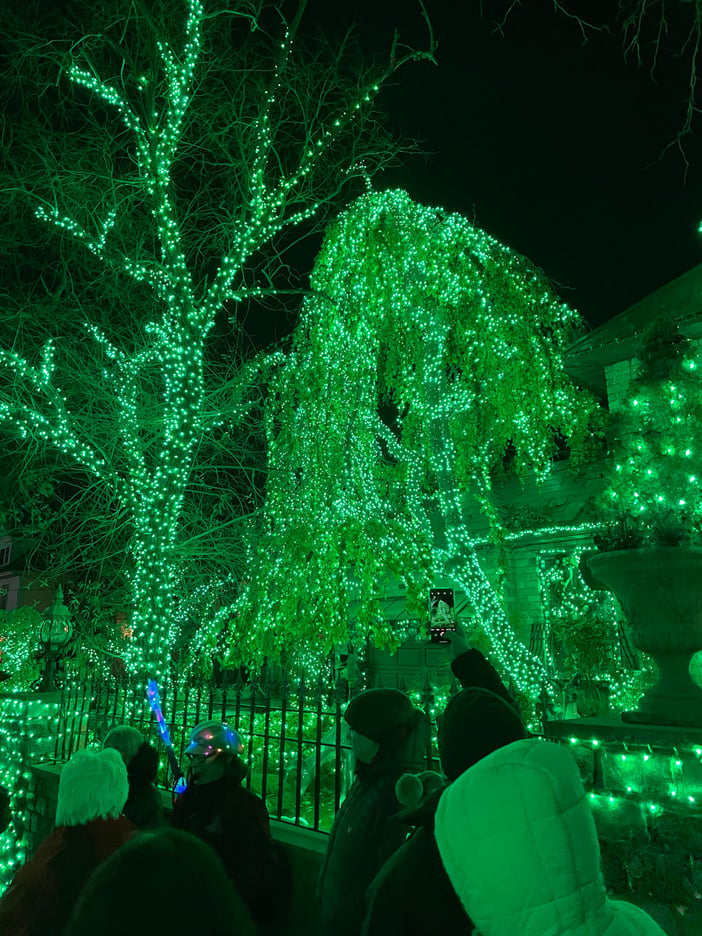
"As a couple from Belgium, we can only recommend this tour, what you get to see there is unbelievable."




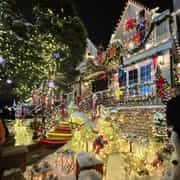
The Brooklyn blocks everyone films have no drive-through route, and the true stay-in-your-car light parks sit a highway away. This guide settles where the wheels can roll, what the drive costs in time, and which heated coach keeps your family off frozen pavement.
Driving Dyker Heights works only on early-December weeknights; on peak December evenings several blocks close to through traffic and police move cars along before the best houses.
Free street parking sits on a residential strip of 14th Avenue, and meters on 13th Avenue expire at 7 pm.
Real drive-through light parks run at Jones Beach (2.5 miles), PNC Bank Arts Center and Skylands Stadium (a mile plus a walkable Christmas Village).
Arrive at the 5:00 to 5:30 pm gates to skip queues that top an hour between 6:00 and 8:30 pm, and book ahead because gate admission on peak weekends sells out.
The heated coach to Dyker Heights handles the driving and parking; the lights themselves can only be seen on foot, so budget about an hour of walking.
Plan for the roughly hour-long guided walk on foot between the decorated homes, and treat the heated coach as your warm refuge between stops. Dress in winter layers with a hat and gloves, and book a tour that includes round-trip transport from Manhattan.
The hope is simple: cruise slowly down a Brooklyn street where houses wear tens of thousands of lights, heater running, kids in the back seat. On a quiet weeknight early in December, that is exactly what happens, and driving through the neighborhood is easy.
Peak evenings are another story. Several residential blocks close off to through vehicles on December weekends, and the traffic that remains crawls bumper to bumper. Police stationed along the corridor move drivers along, so stopping in front of the best houses does not happen.
Drivers who circle for a spot near the core on 10th, 11th or 12th Avenue compete with tour buses and families pushing strollers, and usually end up parking a few avenues out.
Early-December weeknights are the one realistic window to see the displays from a car. Every other night, the sidewalk wins.
That table is the whole case for leaving the car at home on anything close to a weekend. And remember whose street you are on: families live here and sit in that same traffic trying to reach their own driveways, so keep the horn silent and the pace patient.
Brooklyn has no car course, so the genuine drive-through experience means a trip out of the city to venues built for it.
Magic of Lights at Jones Beach State Park winds 2.5 miles past animated LED scenes and light tunnels, and visitors stay inside their vehicles the whole way. The course itself takes about half an hour at display speed, though weekend backups can stretch the visit to two hours.
Magic of Lights at PNC Bank Arts Center in Holmdel runs themed sections like Toyland and Candy Land along the arts center's access roads, with a Prehistoric Christmas stretch where a T. rex in a Santa hat bites a decorated tree.
Skylands Stadium in Sussex County strings more than two million lights along a mile-long course, complete with an enclosed light tunnel and skating bears, and the free Christmas Village at the end lets you get out, roast s'mores and walk a second light tunnel.
The map makes the point plainly: the car-friendly lights all sit beyond the city line, and the city's own famous blocks ask for shoes. These parks run in nearly all weather; Skylands' show operates rain, snow or shine.
Smaller displays fill the map too, from a world-record synchronized house up the Taconic to county fairground courses that once hosted walk-through carnivals and now run strictly as drive-throughs. Check a display's current status before setting out, because long-running shows occasionally shut down or change format.

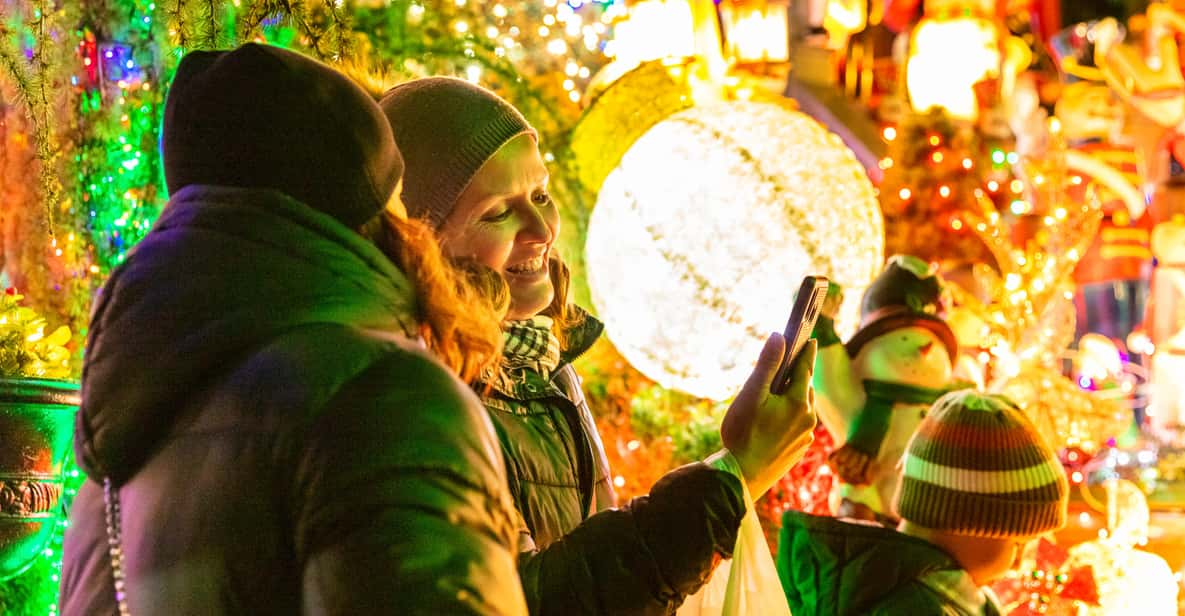
A mapping app gives one number for the trip to a suburban light park, and a December evening gives another. Clear roads put Jones Beach 72 minutes away, PNC Bank Arts Center 50 to 55 minutes, and Skylands Stadium about 88 minutes.
Rush hour rewrites all three. Outbound commuter traffic toward Long Island builds between 3:30 pm and 7 pm, and the 36-mile run to Jones Beach stretches to an hour and a half or two.
Weekend evenings add event congestion at PNC's Exit 116, pushing the 44-mile trip to 90 minutes or more. Skylands sits farthest out, 62.6 miles into Sussex County, though the drive out carries no Port Authority toll; the toll comes on the New York side going home.
Read the two tables together and the pattern shows: the clear-roads figures assume empty parkways, and the December figures come from real holiday traffic meeting commuter volume, which is why they can run 30 to 50 minutes past the calm estimate.
Leave Manhattan before the 3:30 pm commuter wave and you keep the drive close to its clear-weather time.
This is the moment to decide how far your family will sit in a car for a light park, because the coach alternative to Brooklyn runs about four hours door to door with none of the driving on you.
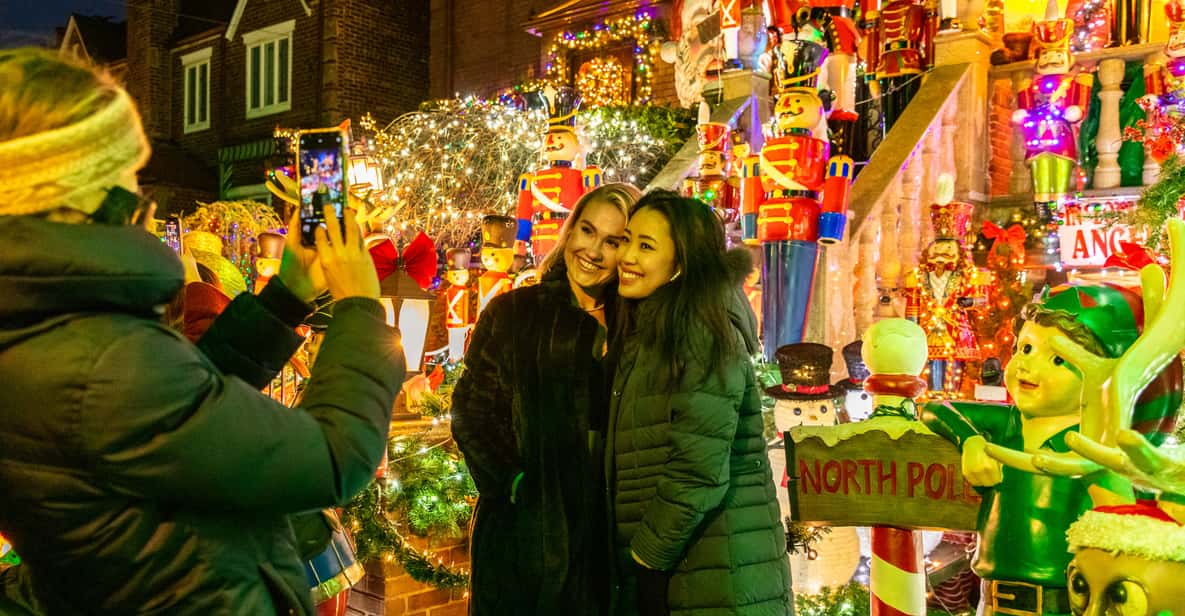
The detail that makes a drive-through worth the highway miles is the sync: animated sequences that fire in time with the music playing on your own FM dial.
A low-power transmitter at the venue broadcasts the soundtrack over a short range, and software reads the music's beat to trigger each light sequence through controllers that decide when every bulb lights, dims and changes color. The frequency is posted at the entrance, so tune in when you join the queue.
The list of shows running this setup is long.
Magic of Lights at PNC syncs its tunnels to your car radio, Winter WonderLights at the Middlesex County Fairgrounds strings more than two million lights to the same trick, and smaller residential productions, from Manville, New Jersey to Sound Beach, New York, broadcast on their own frequencies for cars parked at the curb.
Dyker Heights can never offer any of this. Its displays are the work of homeowners and decorating companies, without show software, so nothing on those Brooklyn blocks moves in time with a soundtrack. The sync and the residential displays are two different nights out.
One first-timer's snag is worth knowing in advance: in newer cars, digital audio buffering makes the music trail behind the lights.
Tune in as you arrive, since the signal only covers the venue and its immediate surroundings
In newer vehicles, disabling HD Radio snaps the music back into time with the lights
Both rows save you fiddling with the dial in the dark, which is the last thing you want while a queue of cars idles behind you.

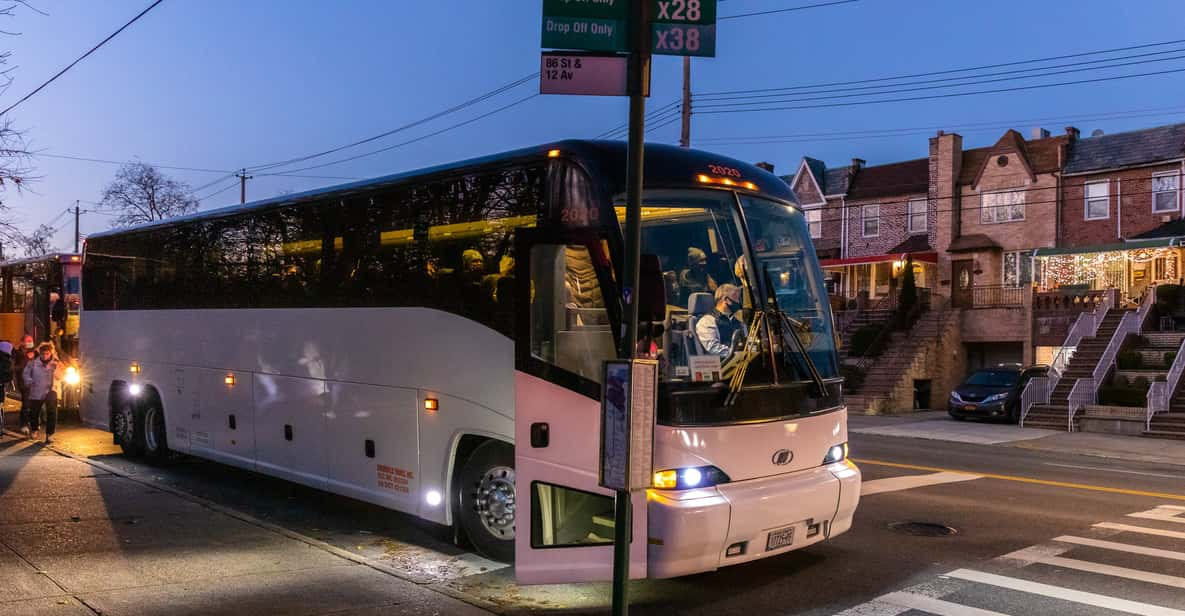
Now the whole board sits in front of you. Three suburban courses keep you inside your vehicle the entire time, warm and synced to music.
One Brooklyn neighborhood puts you on foot among the densest residential displays in the region. A heated coach splits the difference: the vehicle handles every mile of city traffic and parking, while the viewing happens on a guided walk.
The trade turns on what you came for. If the wish was warmth, music sync and zero walking, the suburban courses deliver exactly that, at the price of an hour or more of highway driving each way.
If the wish was the houses on TV, the nutcrackers standing two stories tall and the light density no fairground course matches, Dyker Heights is the destination, and it rewards only those willing to walk its blocks.
| Drive-through rules | Drive time from Manhattan | Music-synced lights | Cold weather comfort | Food and restrooms | |
|---|---|---|---|---|---|
| Dyker Heights | Possible, but several blocks closed | 42 minutes without traffic | not known | not known | Almost none in neighborhood |
| Jones Beach Magic of Lights | Stay in vehicle, 2.5-mile course | 72 min clear; 1.5-2 hr in rush | FM car-radio sync | Warm inside your vehicle | Concessions and Toyota Holiday Village |
| Skylands Stadium | Mile-long drive-through course | 88 minutes without traffic | not known | In-vehicle drive plus walkable village | Christmas Village food and cocoa |
| PNC Arts Center | Stay in vehicle entire drive | 50-55 min without traffic | FM car-radio sync | Warm inside your vehicle | not known |
| Heated coach bus tour | No driving; guided neighborhood walk | not known | not known | Heated coach refuge between stops | not known |
One row of that matrix decides most families' answer: the coach line, which hands the driving to someone else and still reaches the famous houses.
On the site, that option is the NYC: Heated Bus & Guided Dyker Heights Christmas Lights Walk, four hours from Manhattan. What it cannot do is put the lights behind glass: buses are barred from the display streets, so passengers walk.
More lights per block than any drive-through, but no drive-through view of them exists. For families who want the fairground format, the suburban courses fill that slot honestly.
The evening has a curve, and it bends around dusk. Gates at the regional drive-throughs open around 5:00 to 5:30 pm, and cars that roll in at dusk meet little to no queue. The parkways stay clear, the course moves, and you are home earlier.
Between 6:00 and 8:30 pm the curve peaks. Entry lines build past an hour on those evenings, worst of all on weekends, and the final pre-Christmas stretch compounds the problem as county parks and fairgrounds fill to capacity. Traffic moderates after 8:30 pm on weekdays, though weekends stay heavy late.
Arriving right at dusk yields little to no waiting line.
Car queues peak, causing waits that can stretch over an hour.
Traffic moderates on weekdays but stays heavy on weekends.
January: 5 out of 5 for how busy it gets.
Tap a month to read it.
The two charts read the same season from different ends: the first shows how a single evening fills, the second how December crowds dwarf every other month on the calendar, November included. Two habits save the evening.
Buying tickets ahead secures your slot and often routes you into a shorter vehicle entry line. Arriving twenty minutes before gates open clears the parkway backup entirely.
The opposite habit costs people their night: assuming gate admission will be available on a peak Saturday, when sold-out time slots turn drivers away at the booth. A Wednesday early in the season gives the easiest entry of all. Arrive at dusk or book ahead; the two together keep you out of the queue.

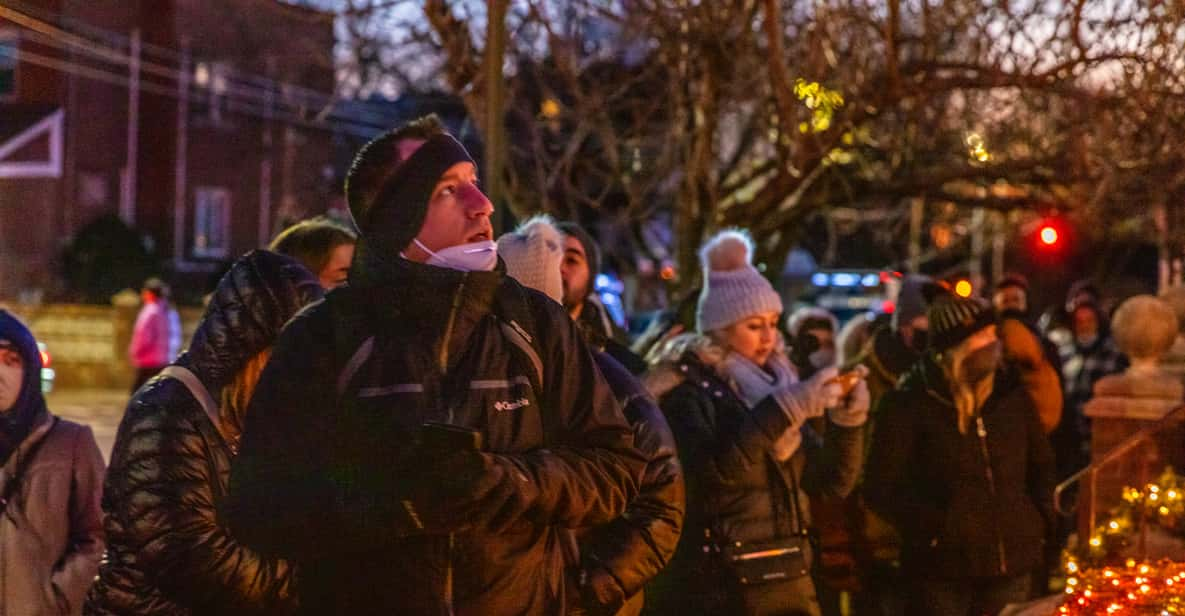
For the reader whose real wish was never driving at all, the story turns back to Brooklyn and the warmest seat on this page. December nights in Dyker Heights sit between 4 degrees and minus 4, and the wind finds you on the exposed sidewalks.
A heated coach turns that into a non-issue between stops: the vehicle collects you in Midtown, crosses into Brooklyn with traffic and parking handled, and parks in a designated area outside the display streets while you walk.
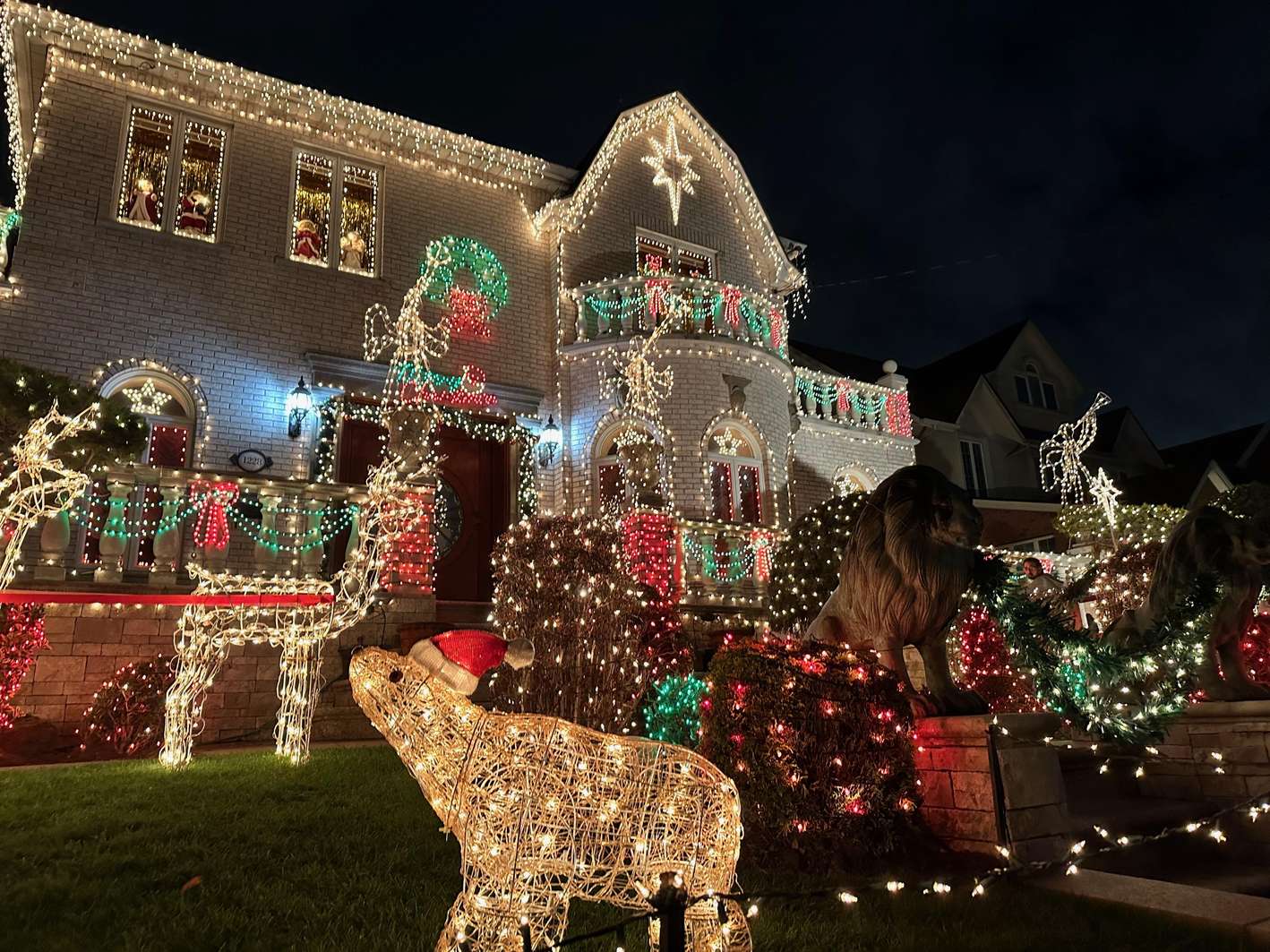
The NYC: Heated Bus & Guided Dyker Heights Christmas Lights Walk does exactly this over four hours. A licensed guide leads the walking portion, about 45 minutes to an hour, straight to the standout mansions and their giant inflatables, which means no wandering cold streets hunting for the good blocks.
The route also passes classic Manhattan holiday sights on the way out, and the bus waits warm with restroom facilities aboard when the walk ends.
Families with small children and travelers who would rather skip subway transfers and a mile of cold pavement get the vehicle experience they searched for, minus the driving. The heated bus is the warm refuge; the hour-long walk is still the price of the famous houses.
The billing model decides the budget before any course is chosen, and the region splits into two camps.
Most drive-through spectacles charge a single rate per vehicle that covers every passenger inside: Winter Wonderland at the Kensico Dam prices its drive that way, as do Lights of Joy, Magical Nights of Lights and the World of Illumination shows. A full car splits one per-vehicle rate, which can undercut any walking tour per head.
A handful of farm drives charge per person, so Harvest Moon bills each rider individually and a packed minivan pays for every seat.
Timing matters as much as the rate. Advance tickets lock in the slot and feed the shorter entry line, while turning up at the booth on a peak weekend night risks sold-out time slots and a turned-around car.
Some events, like Fairglow on regular nights, still take payment at the gate with no reservation, and certain drives sell open tickets good on any night of the season.
The Brooklyn option carries no admission at all. Walking past the Dyker Heights houses costs nothing, which is why the coach tours compete on convenience: what you pay for is the ride, the guide and the warmth.
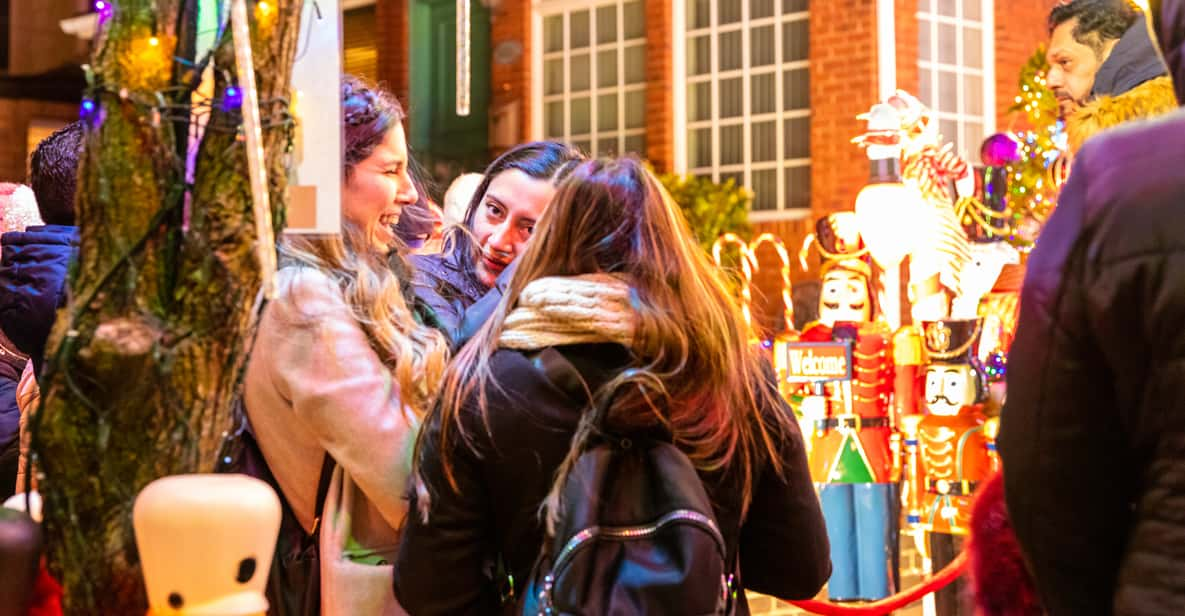
Snow rarely cancels anything here. The Dyker Heights coach tours run in rain, shine and snow, and the suburban courses treat weather the same way; only truly severe conditions cancel select itineraries. A forecast of flurries should not scare you off a booking.
The refund line is what needs reading, and each operator draws it differently. Some allow full cancellation up to 24 hours ahead, others to two days. One ticket structure refunds in full minus a small fee a week out, returns half inside that week, and keeps everything within 48 hours of departure.
| If this happens | What happens then |
|---|---|
| Severe weather cancels the tour | The booking moves to another date or refunds under the operator's terms |
| Cancellation 24 hours or more before departure | Full refund on most tours |
| Cancellation between 48 hours and one week | Full refund minus a small fee, or half back, depending on the operator |
| Cancellation within 48 hours | No refund |
The practical consequence sits at the front of the plan: peak-season seats sell out about two weeks ahead, so booking early keeps both the slot and the free cancellation available to you. Late bookers get neither.
Cold-weather fine print helps too: most packages leave food and drinks out, and some vehicles prohibit them inside entirely, so the hot cocoa plan belongs to the neighborhood stops rather than the bus.
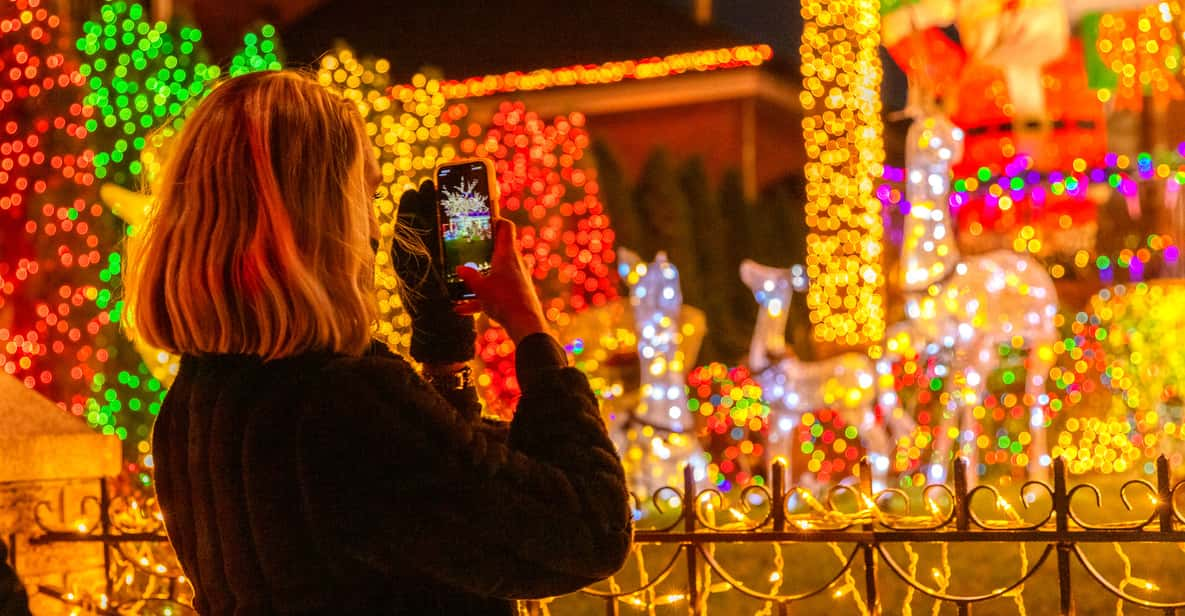
Whichever night you chose, the same bodily logistics apply, and they decide comfort more than the light count does.
Dyker Heights is almost entirely residential, with virtually no public restrooms and no seats along the blocks. The stop happens before the lights, in the Bay Ridge businesses along 4th Avenue and 86th Street, or at the Bay Ridge Library if you arrive by train.
The Dyker Library branch at 13th Avenue and 82nd Street is the closest warm indoor stop to the displays.
The eating is better than the plumbing. Tasty Pastry Shoppe on 13th Avenue near 82nd Street pours hot chocolate and sells Italian pastries, staying open until 8 pm on Saturdays, and Grandma's Bakery and Mona Lisa Bakery further down the avenue are the cannoli stops.
Bring cash for the charity boxes some homeowners set out, though QR codes cover online donations too.
The suburban parks run the opposite setup: food everywhere, restrooms scarcer near the courses. Skylands' free Christmas Village keeps barbecue, an ice cream shop and a hot chocolate bar, and Jones Beach pairs its drive with concession stands, a firepit at The Village and sweet treats in the Toyota Holiday Village at the course's end.
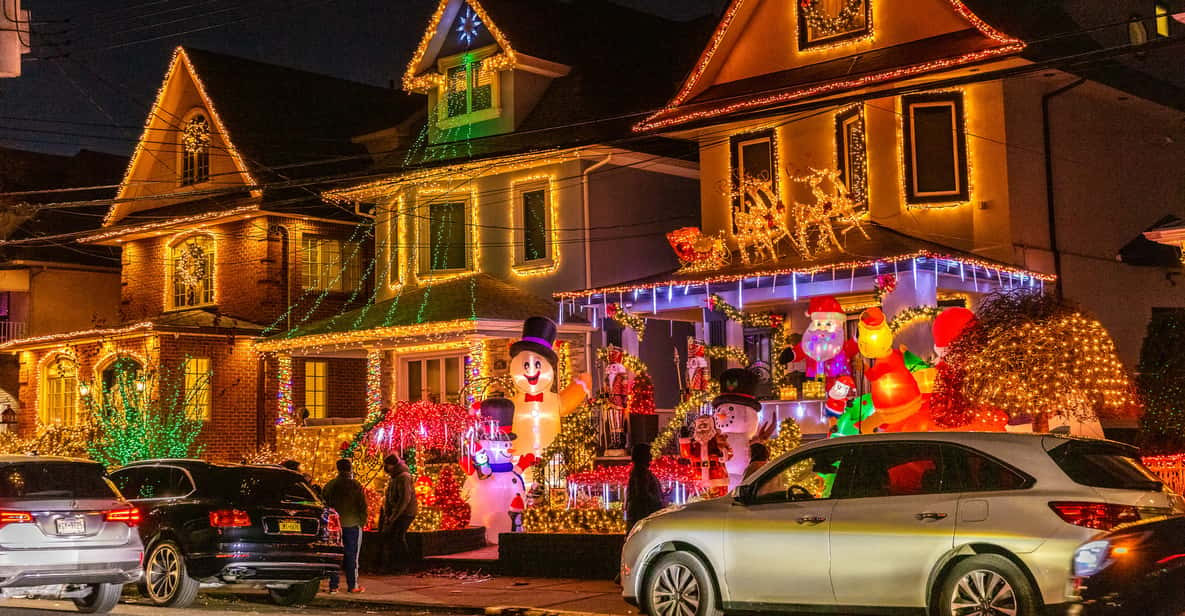
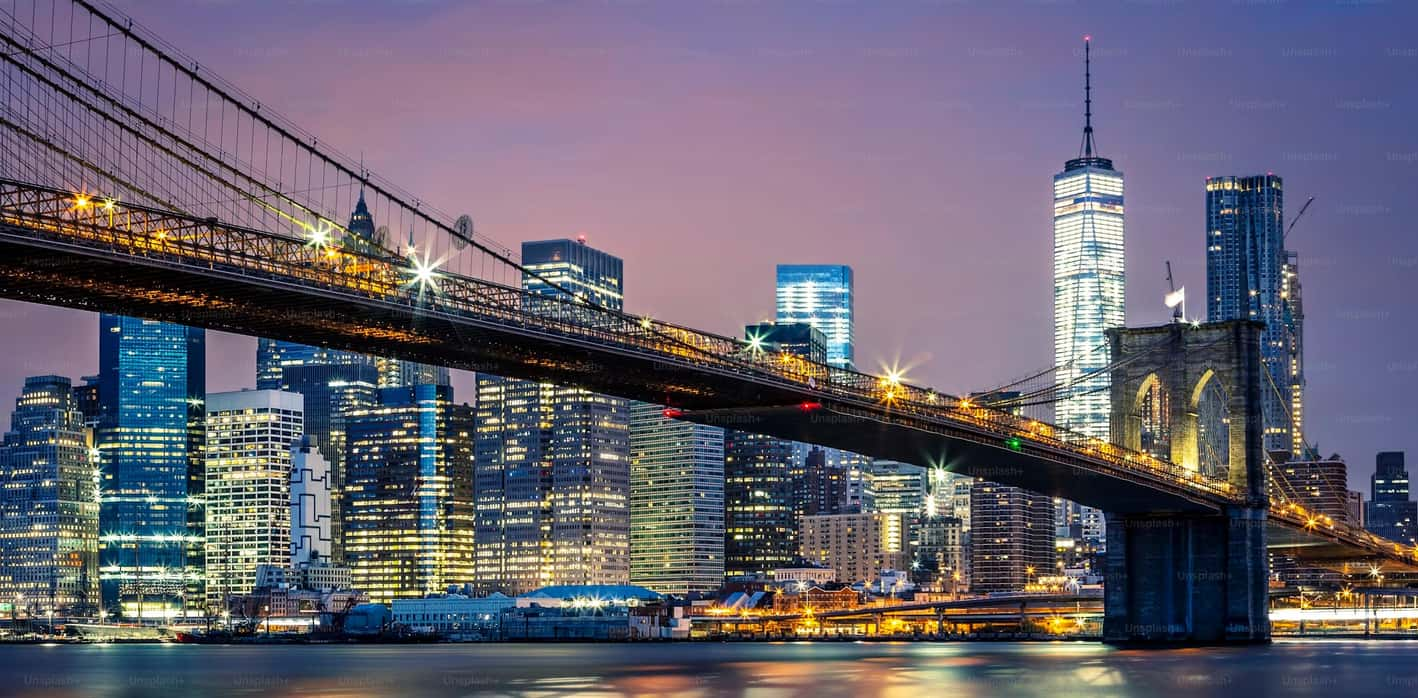
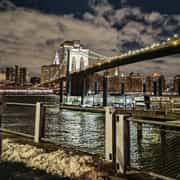
The evening has room for a second act, and the coach routes build it in. Most itineraries end with a photo stop at Brooklyn Bridge Park, where the Manhattan skyline and the Brooklyn Bridge stand lit across the water. Some tours extend into DUMBO, a short hop away, for skyline views under the arches.
DUMBO in winter asks for two small preparations. Its historic blocks of Water, Main and Front Street run on uneven cobblestones, which turn slick in rain or snow, so flat grippy shoes beat dress shoes for the photo stop.
Cold winds blowing off the East River make the waterfront feel sharper than the neighborhood streets did, which is worth a scarf even after the coach.
Most of what sits within a short walk of the tour area is everyday Brooklyn, with the Dyker Heights lights themselves the sight worth the six minutes on foot.
Closer to the display blocks, the neighborhood stays quiet after the walk: a bakery on 13th Avenue, a park ten minutes out, and not much else, which is the honest shape of a Brooklyn residential evening.
The pairing that works best leads with the houses while every bulb burns, then closes with the skyline from the water's edge on the way home, camera roll already full.
A true drive-through near NYC means a highway run to Jones Beach, PNC or Skylands, timed to the dusk gates. The Brooklyn blocks everyone wants to drive close on peak December weekends close off, crawl with traffic and reward walkers anyway.
The heated coach to Dyker Heights is the pick for families who want the vehicle to do the work, booked two weeks out.
A heated coach from Midtown carries you to Brooklyn's famous lights, with a guide who walks you straight to the best blocks.
Read the guide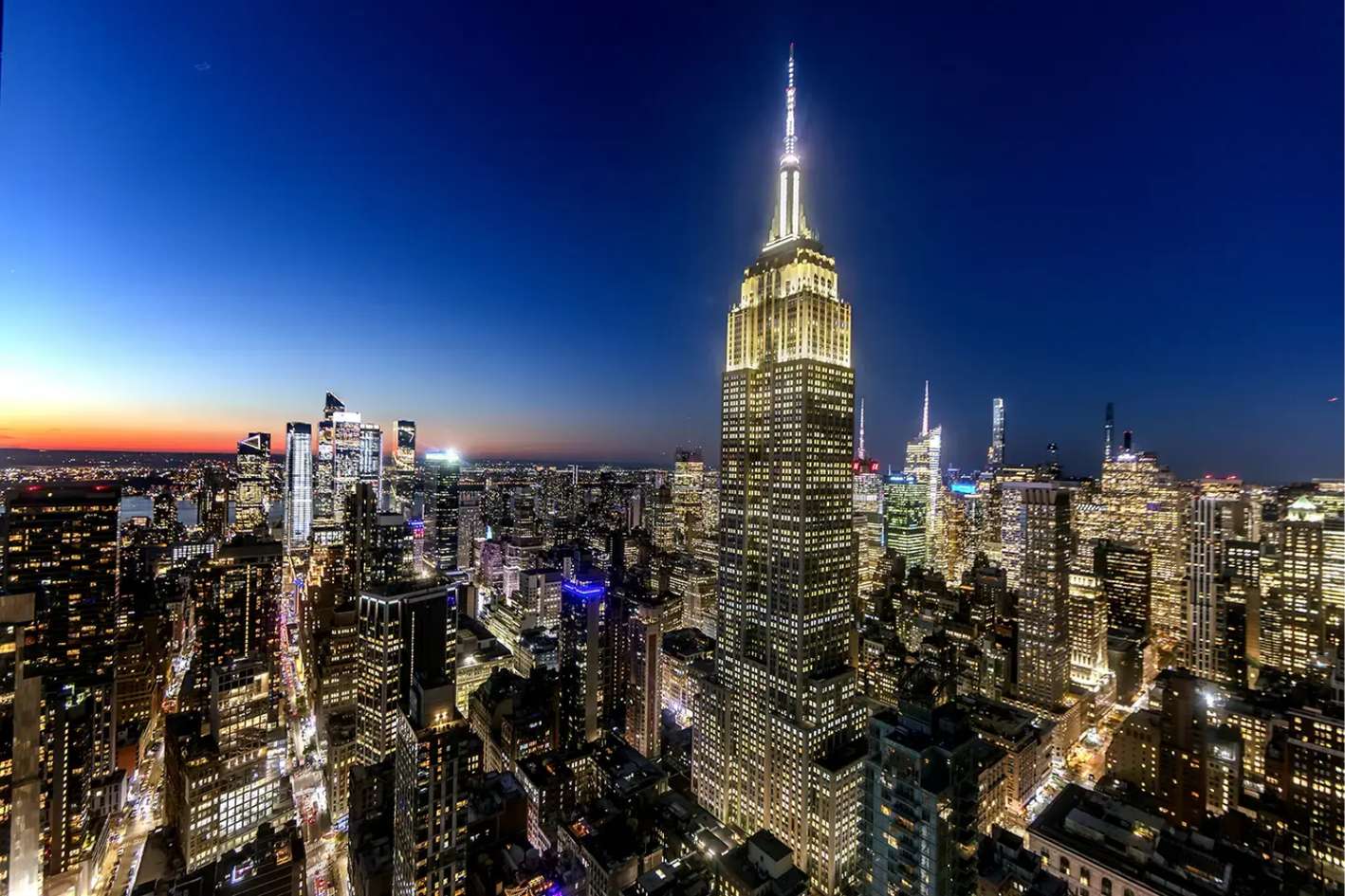
The Midtown tree is switched on the Wednesday after Thanksgiving and glows daily through early January, with hours and crowd tips on its page.
Read the guide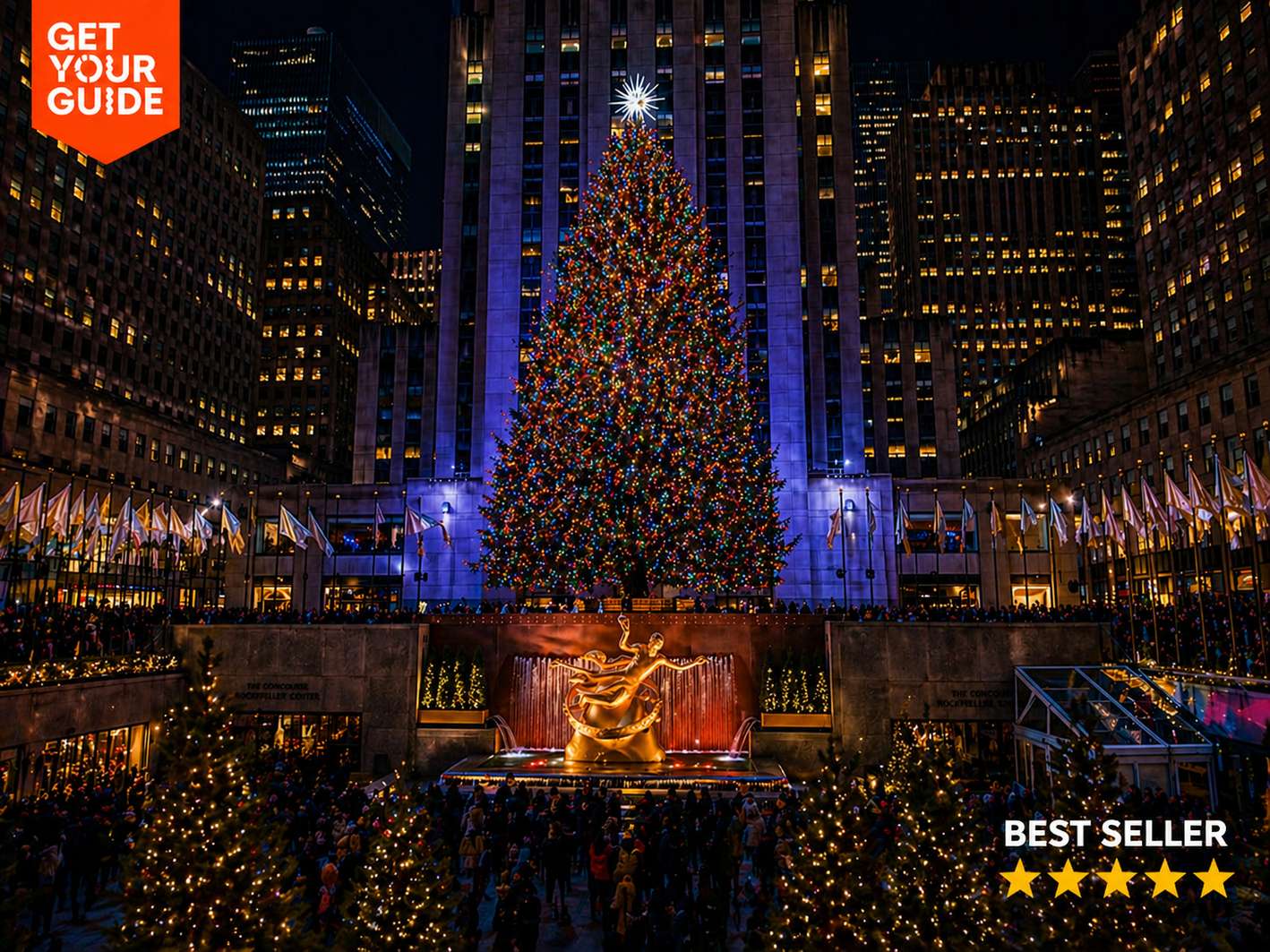
The department store windows between 34th and 59th Streets cost nothing to see, and the facade light show repeats every 10 to 15 minutes.
Read the guide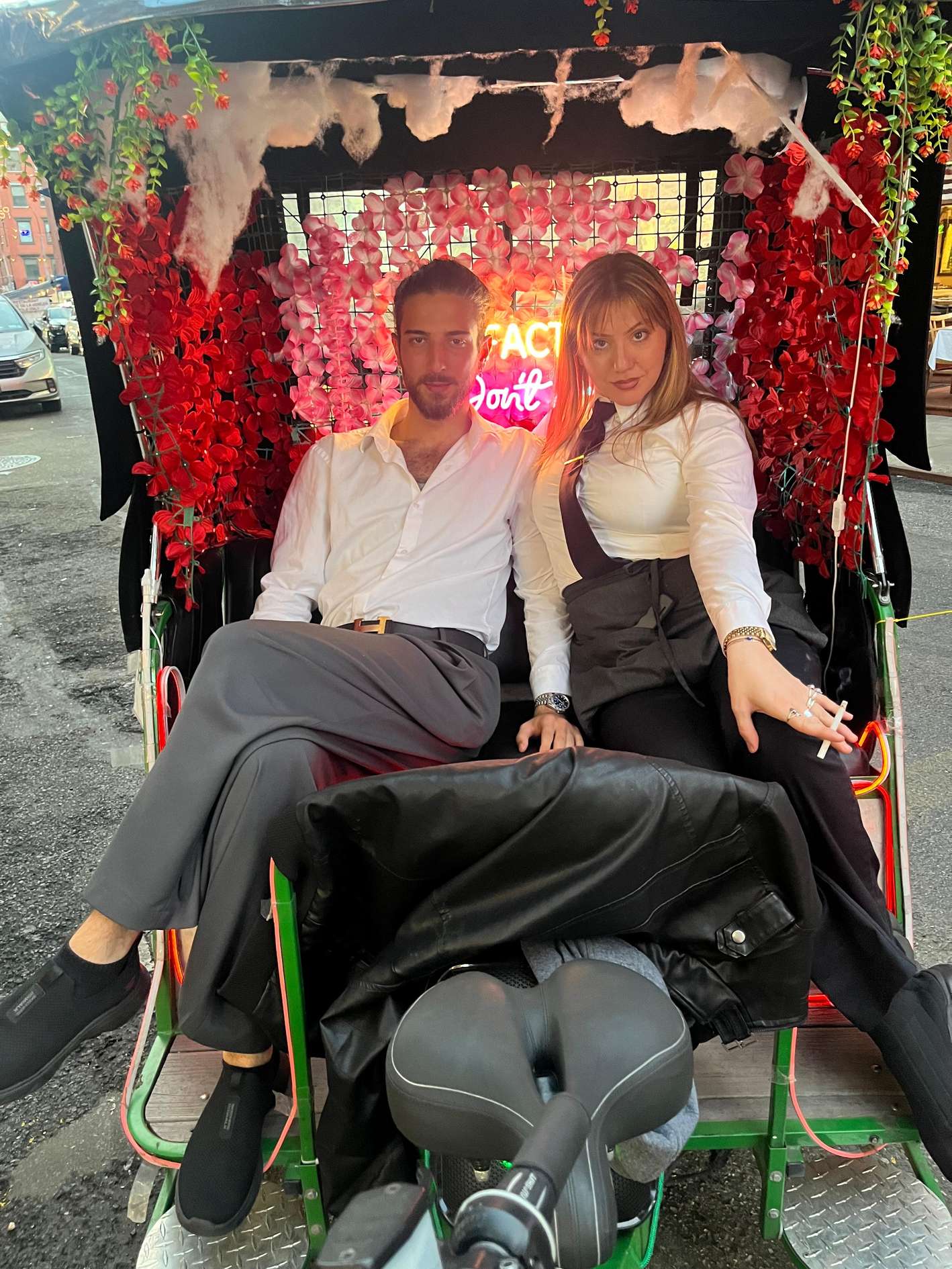
A carriage or pedicab gives you a seat for the park's holiday look: Wollman Rink, the market, and floating trees on the Harlem Meer.
Read the guideDyker Heights is where the residential displays are, free to walk past, with lights on from the weekend after Thanksgiving into January.
Read the guide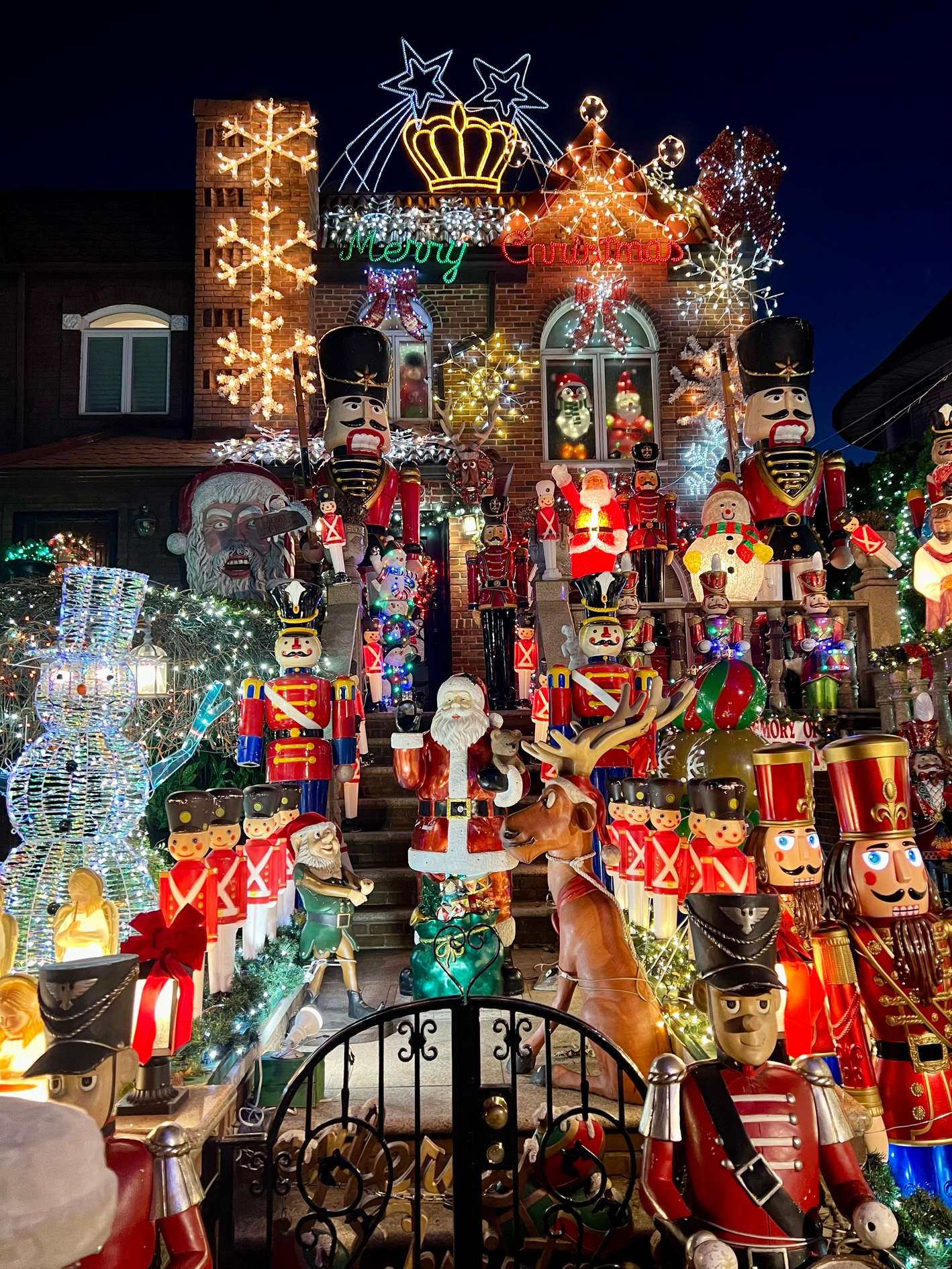
Walking tours put you right in front of the displays for close-up photos, from a 1.5-hour stroll to longer guided routes.
Read the guideEach of these outings puts you near the lights in a different way: some keep you in a warm vehicle the whole night, and some ask for a walk.
A heated coach handles the trip to the lights so you never have to drive or park.
The bus leaves Midtown with a guide aboard, crosses into Brooklyn, and parks outside the display streets while you walk the lit blocks for about an hour.
Guides tell the story of the tradition that started in the 1980s with one family's house, and several routes end with a skyline photo stop. December nights in Brooklyn sit near freezing, and the neighborhood has no public restrooms, so the heated coach between stops earns its place.
The lit houses cannot be seen from the bus window, so expect real walking. Weekend seats sell first, and this page's tours need booking about two weeks ahead in peak season. Cancel up to 24 hours before for a full refund.
4 hours · ★ 4.7 (1,203)NYC: Dyker Heights Christmas Lights & Skyline View Bus TourFrom $69 4 hours · ★ 4.7 (3)NYC at Night: 3.5 Hour Tour of Holiday LightsFrom $79 4 hours · ★ 4.6 (2,450)From Manhattan: 4-Hour Dyker Heights Holiday Lights Bus TourFrom $63 4 hours · ★ 4.6 (1,008)From Manhattan: Dyker Heights Lights Tour with Skyline ViewsFrom $49 The exact night the big Midtown tree lights up, and how crowded it gets.
The huge Midtown tree is switched on the Wednesday evening after Thanksgiving, close to 10 pm, on a broadcast night when police barricades seal the streets around the plaza.
Once lit, the tree glows every day from 5 am to midnight through early January. Regular December evenings still pack the plaza, though weekday mornings before 11 am are calm.
This page settles the dates and hours so you can plan which night to stand in the crowd. If you want a seat while you watch, the holiday pedicab ride stops at the tree and rolls past the Fifth Avenue windows in an hour and a half.
Window displays and a facade light show that repeat every few minutes, free to watch.
The store windows on Fifth Avenue run between 34th and 59th Streets, and the famous facade light show starts around 4:30 pm and replays every 10 to 15 minutes into the night.
No tickets or reservations are needed. Crowds thicken between 7 and 9:30 pm, so weekday mornings show the window details up close and nights after 9:30 pm give you room to move.
The light show is projected high on the building, so it stays visible above the packed sidewalk. This page maps the exact blocks and the transport that keeps you off your feet between stores.
A seated, slow ride through the park in its holiday dressing, blankets included.
Central Park keeps its holiday dressing understated: Wollman Rink glows against the skyline, the market sits at Columbus Circle, and illuminated trees float on the Harlem Meer.
A horse-drawn carriage gives you a seat and a slow ride, with lap blankets handed out, though the open carriage carries real wind chill.
The horses return to the stable when the temperature hits 18 degrees, so a very cold night can cut a ride short. The movie-location pedicab tour covers the filming spots from Home Alone 2 and Elf in an hour and a half.
More than a hundred homes compete with professional displays every December.
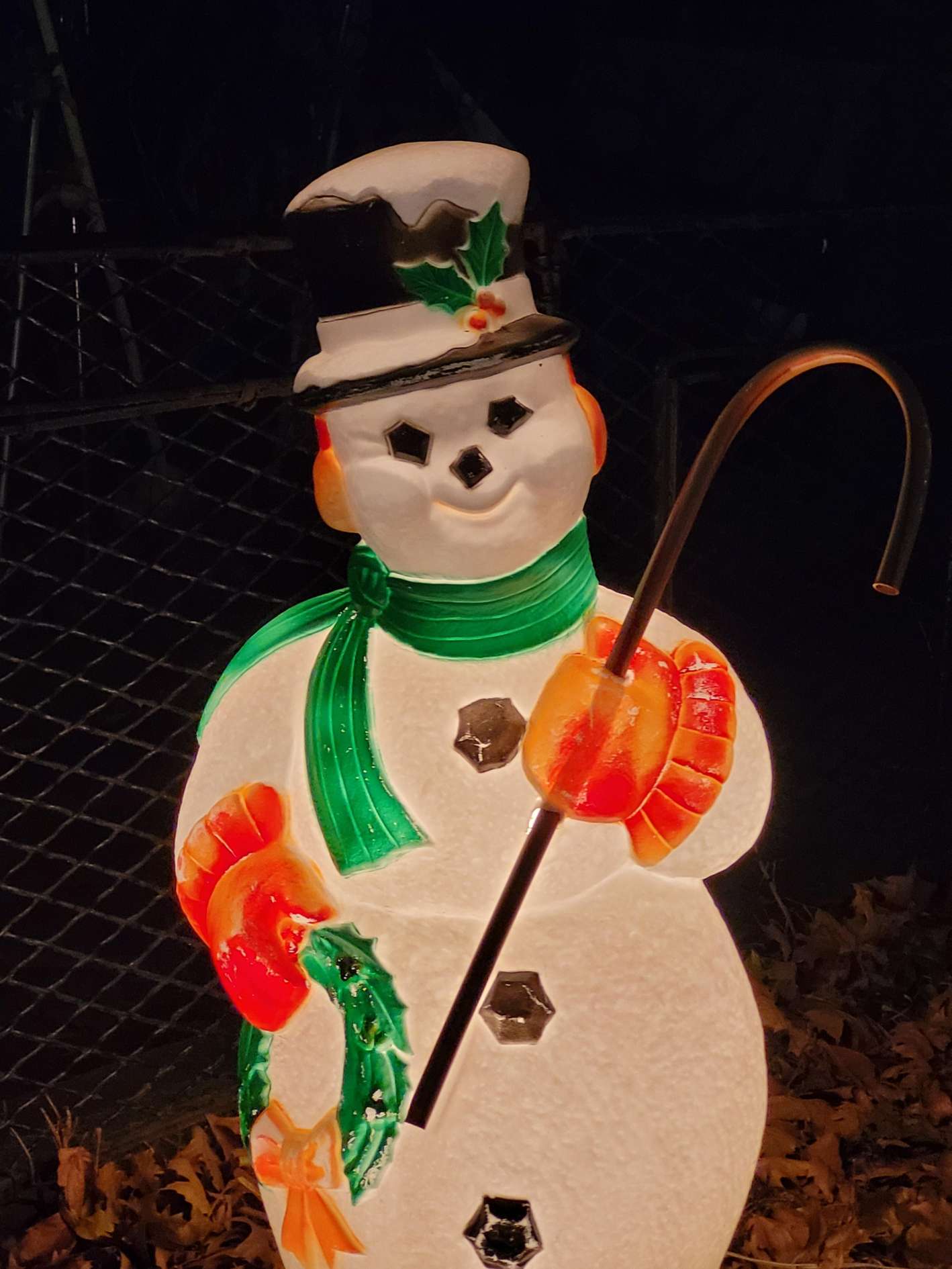
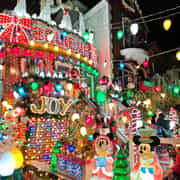
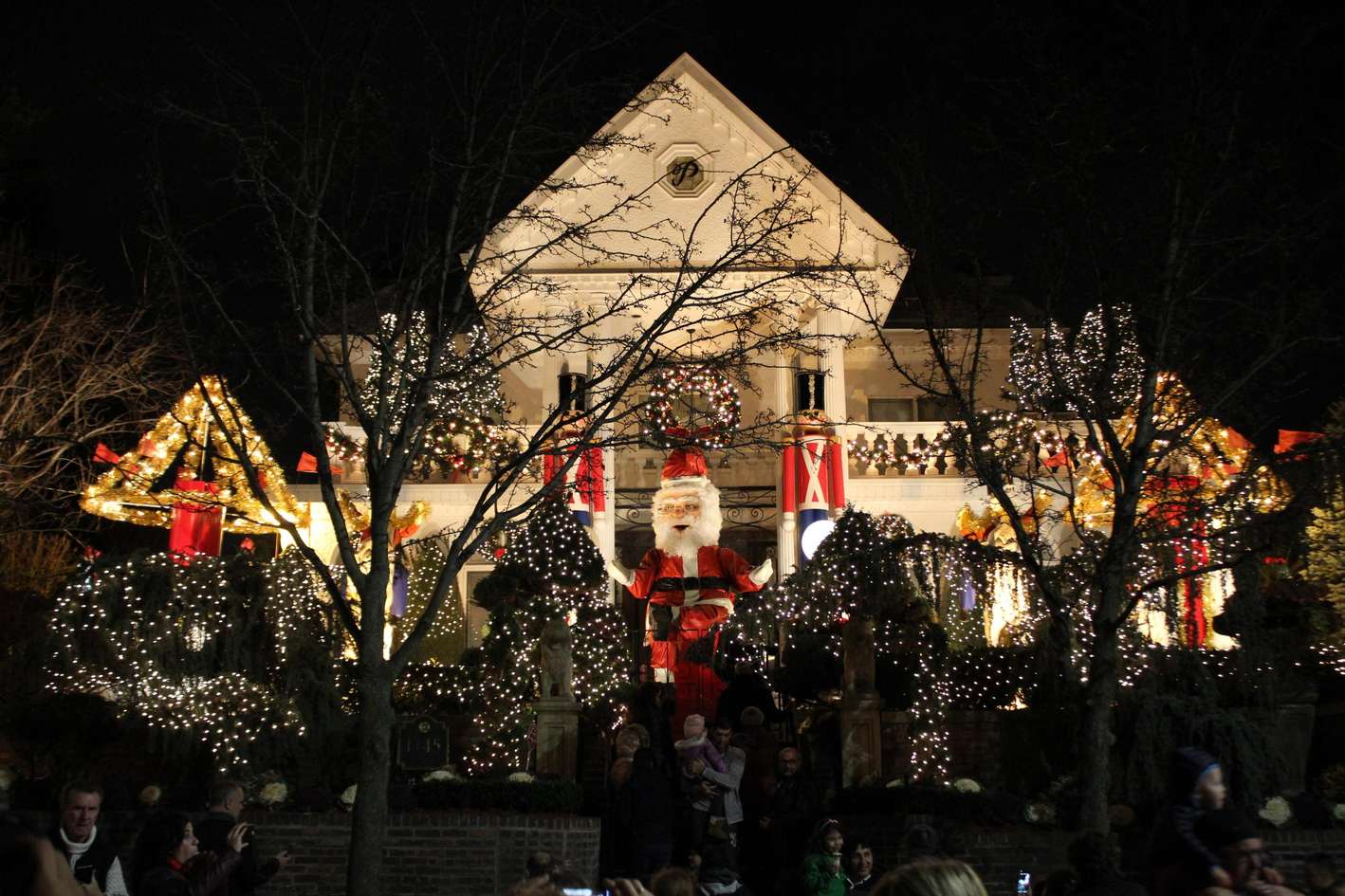
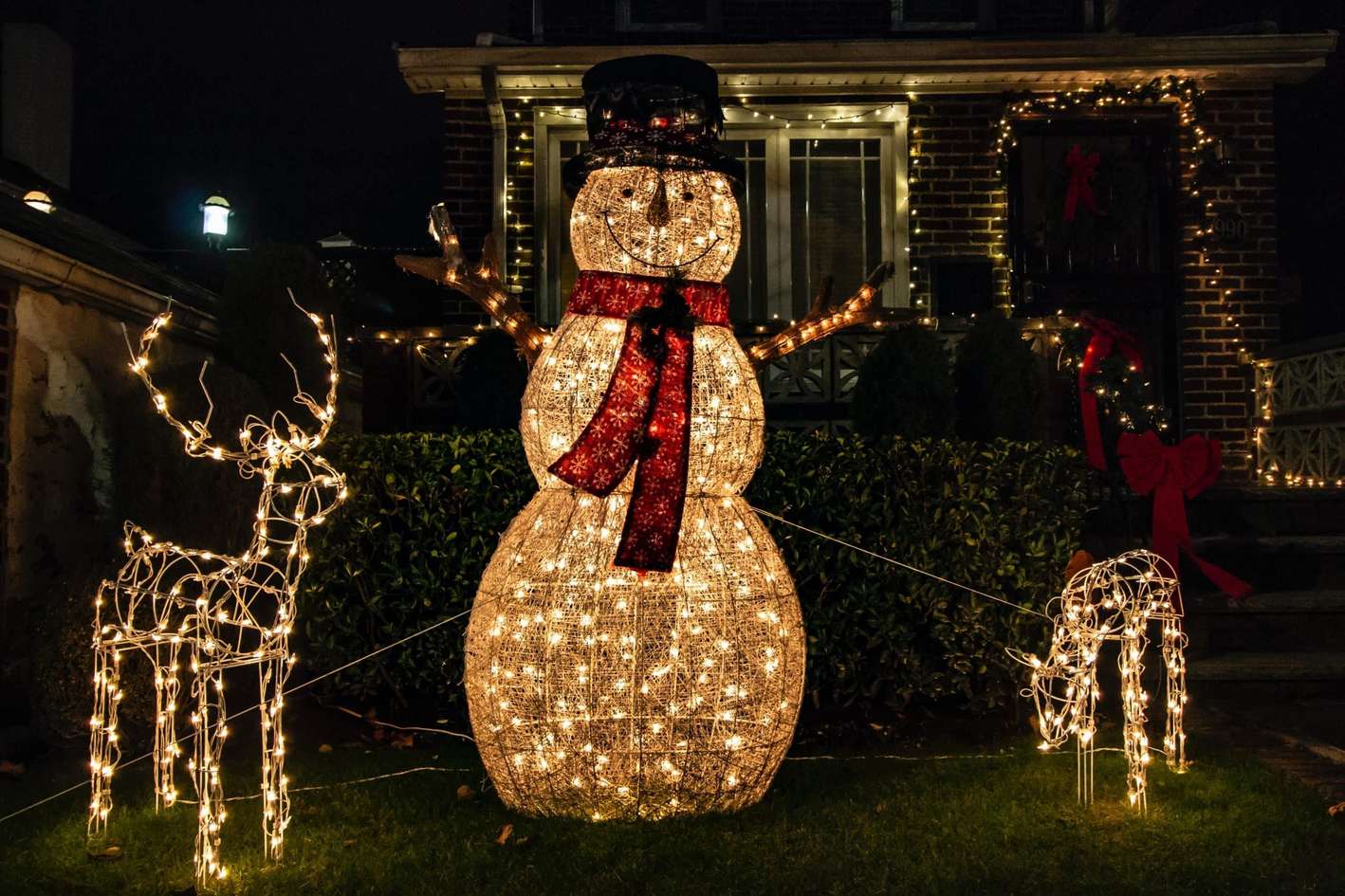
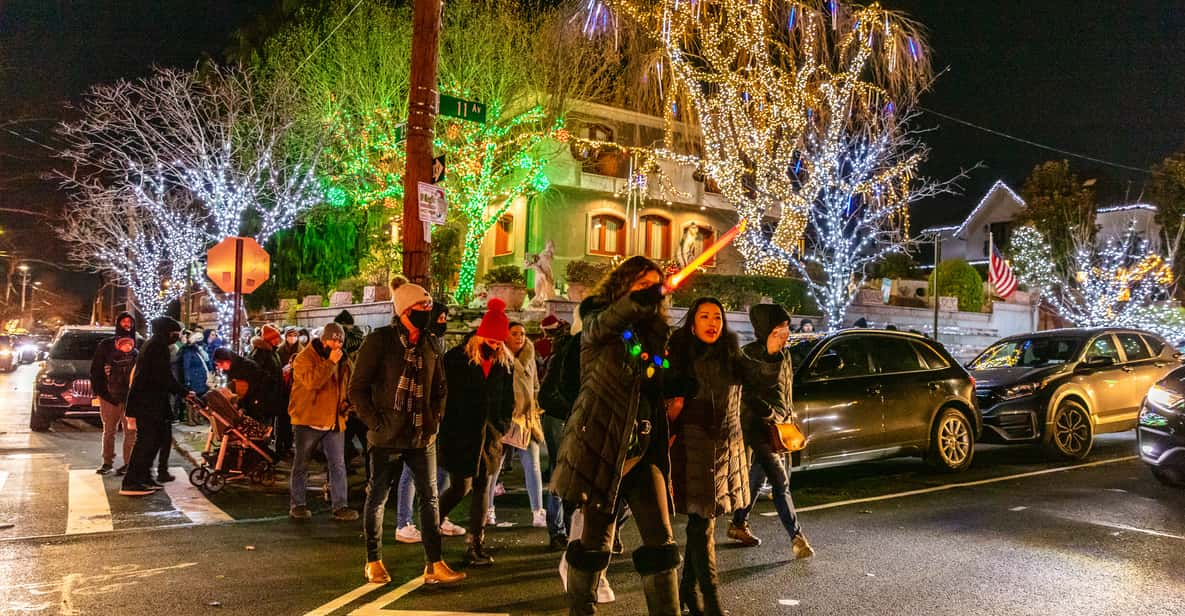
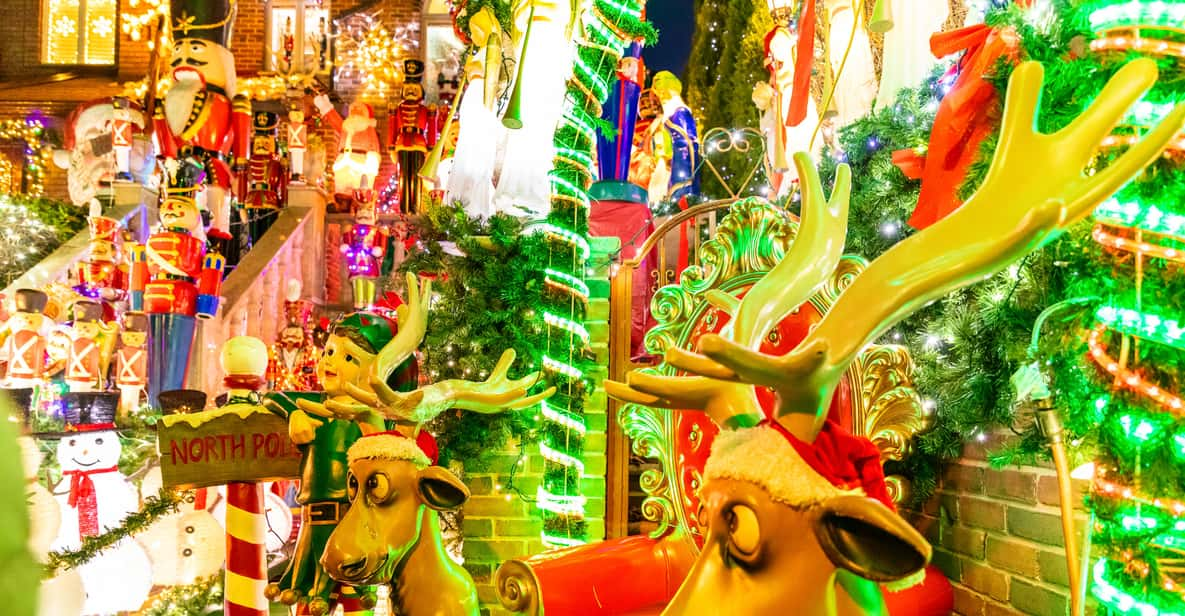
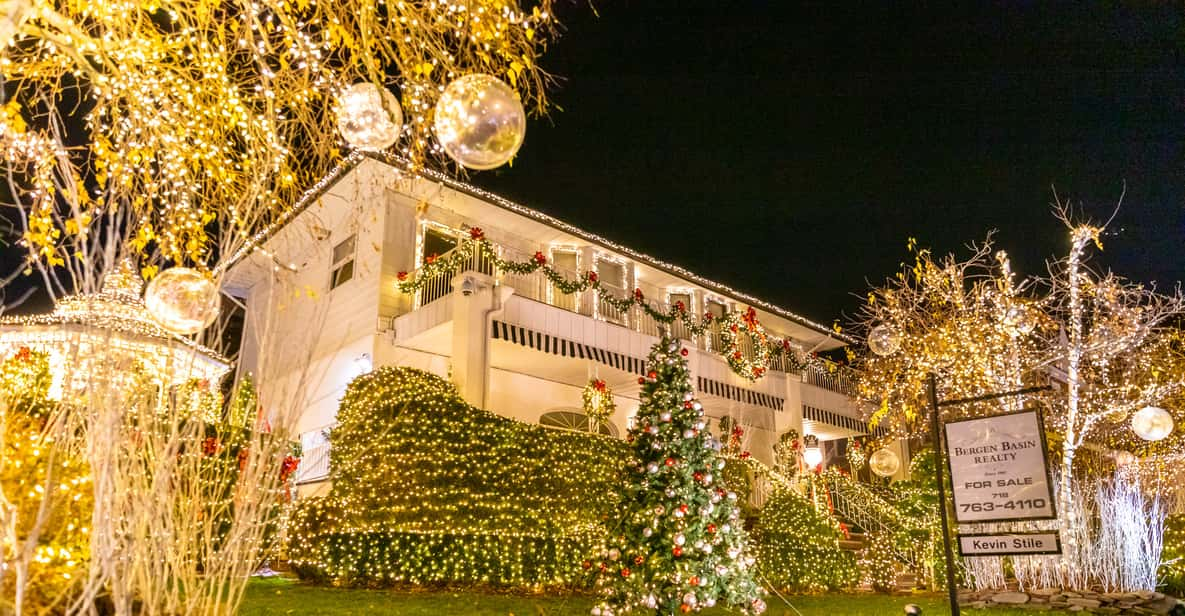
Brooklyn's decorated houses cluster tight in Dyker Heights, from 11th to 13th Avenues between 83rd and 86th Streets, with more than a hundred homes taking part each year.
Homeowners light up the weekend after Thanksgiving and keep displays running through early January, switching off between 9 and 10 pm. Walking past the houses is free, and some owners collect charity donations by box or QR code.
Driving the core blocks on a December weekend means gridlock, closed streets, and parking a few avenues out. That is the problem a coach or a walking tour sidesteps, and this page tells you which to pick.
4.5 - 5 hours · ★ 4.7 (40)New York City: Dyker Heights Christmas Walking TourFrom $45 4 hours · ★ 4.7 (1,203)NYC: Dyker Heights Christmas Lights & Skyline View Bus TourFrom $69 4 hours · ★ 4.6 (2,450)From Manhattan: 4-Hour Dyker Heights Holiday Lights Bus TourFrom $63 4 hours · ★ 4.6 (1,008)From Manhattan: Dyker Heights Lights Tour with Skyline ViewsFrom $49 Street-level views, unobstructed photos, and a guide who knows the standout houses.

Walking tours put you at street level in front of the displays, close enough to read the details and photograph without glass in the way. Routes range from a 1.5-hour evening stroll to about 2 or 3 miles of walking, and expect 25 to 40 degrees on a December night.
The neighborhood sidewalks are narrow and hilly, with no public restrooms or seats along the blocks, so warm layers and a bathroom stop in Bay Ridge matter.
Tours run in rain and snow. If an hour on frozen pavement sounds like too much, the coach page is the warmer choice.
3 hours · ★ 5.0 (3)Dyker Heights: Walking Tour of Thousands of Holiday LightsFrom $47 4.5 - 5 hours · ★ 4.7 (40)New York City: Dyker Heights Christmas Walking TourFrom $45 4 hours · ★ 4.7 (1,203)NYC: Dyker Heights Christmas Lights & Skyline View Bus TourFrom $69  3.5 hours · ★ 4.6 (29)NYC | French guided tour of Christmas in BrooklynFrom $79
Want the full map of the city's holiday lights? This guide covers the best places to see Christmas lights in New York City.
Planning dates around the big tree? Here you get the exact Rockefeller Center lighting date and what to expect that evening.
After the drive-through course, see the light show on Saks Fifth Avenue's facade and the Macy's windows up close.
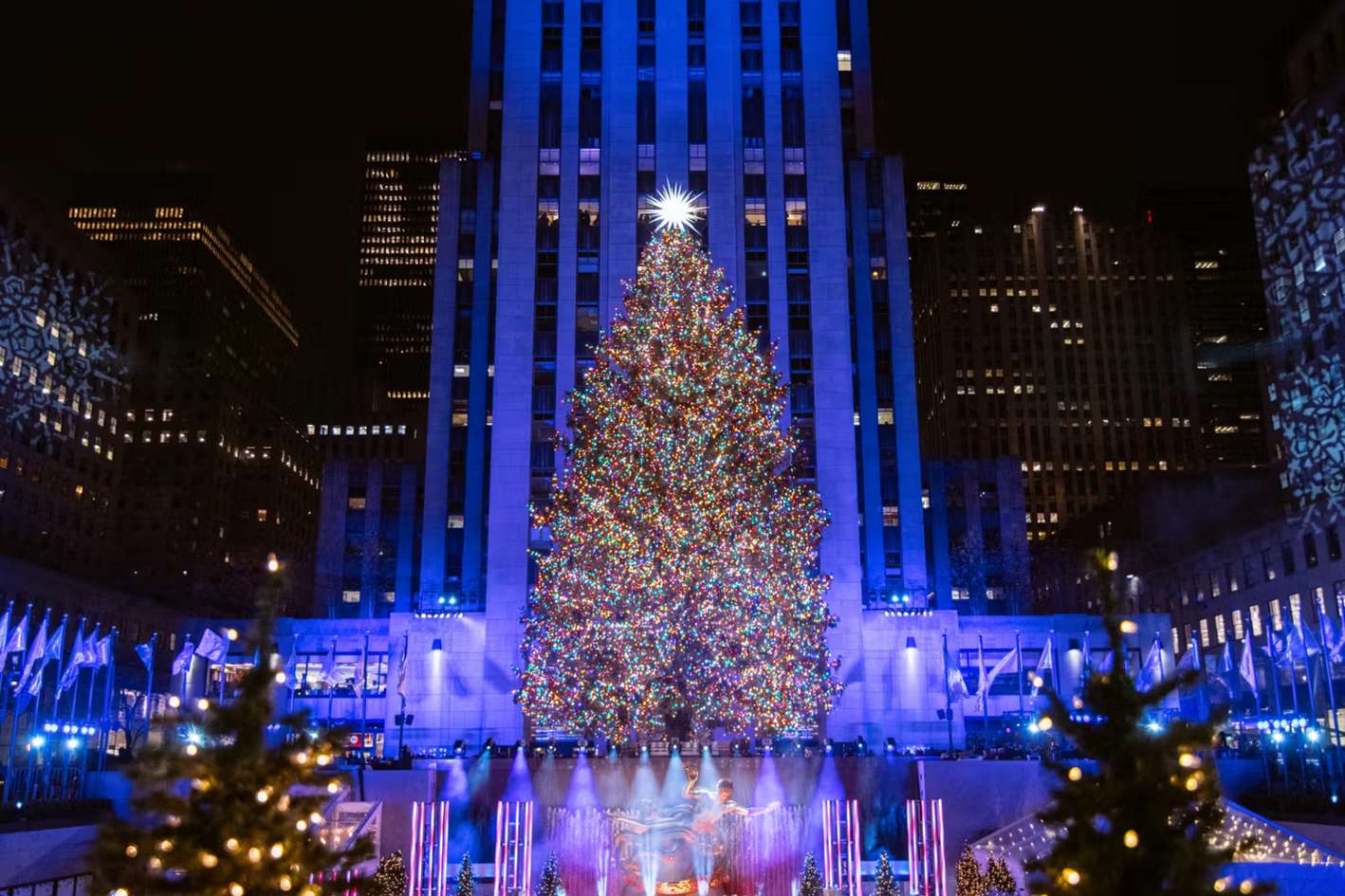
Prefer blankets over a steering wheel? Find out how a Central Park carriage ride pairs holiday lights with open air.
Curious why buses park outside the displays? This page walks you through Brooklyn's decorated houses street by street.
Ready to leave the vehicle behind? Compare walking tours that pair holiday windows and markets on foot.
The questions readers ask before choosing a heated seat to Brooklyn, answered plainly.
 New York City2026
On a quiet weeknight early in December, a slow drive past the houses can work. On busy evenings, several residential blocks close to through vehicles, traffic crawls, and police move cars along so nobody stops in front of the best houses.
The illuminated houses cannot be seen from a bus window, and the decorated blocks do not allow vehicles in. Tours park in a designated spot and the guide leads a walking visit through the core streets.
Plan on about an hour on foot once the bus stops, covering the blocks between 11th and 13th Avenues. The tours here list them as not suitable for people with mobility impairments, so read each tour's details before booking.
You ride from Manhattan in a heated coach, which works as a warm refuge between stops. Dress in layers for the walking part: December evenings in Brooklyn run from 4°C down to about -4°C, and the outdoor portions go on regardless.
There is no official date, but displays consistently launch the weekend after Thanksgiving, when only around 20% of houses are lit. They stay illuminated through the first week of January.
Dusk between 4:30 pm and 6 pm brings fewer crowds, while congestion peaks between 5 pm and 9 pm. Homeowners start switching displays off between 9 pm and 10 pm, so earlier is the safer bet. One tour on this page runs departures from 4 pm onward.
The bus tours here run rain, shine, or snow, and the displays stay lit in wet weather. Cancellation happens only in extreme conditions, and you can cancel up to 24 hours ahead on most tours for a full refund.
The display blocks have no public restrooms and no buildings to duck into. One tour has restrooms on the bus, and Bay Ridge businesses near the meeting points are the practical option before you set out.
Along 13th Avenue, Tasty Pastry Shoppe near 82nd Street is a stop for hot chocolate and Italian pastries, and hot chocolate is available for purchase in Dyker Heights on one tour. Another hands out a complimentary holiday treat at the end.
Peak season tours require booking at least two weeks in advance, and December weekend slots fill first. Pick your date and reserve early rather than counting on a seat at the gate.
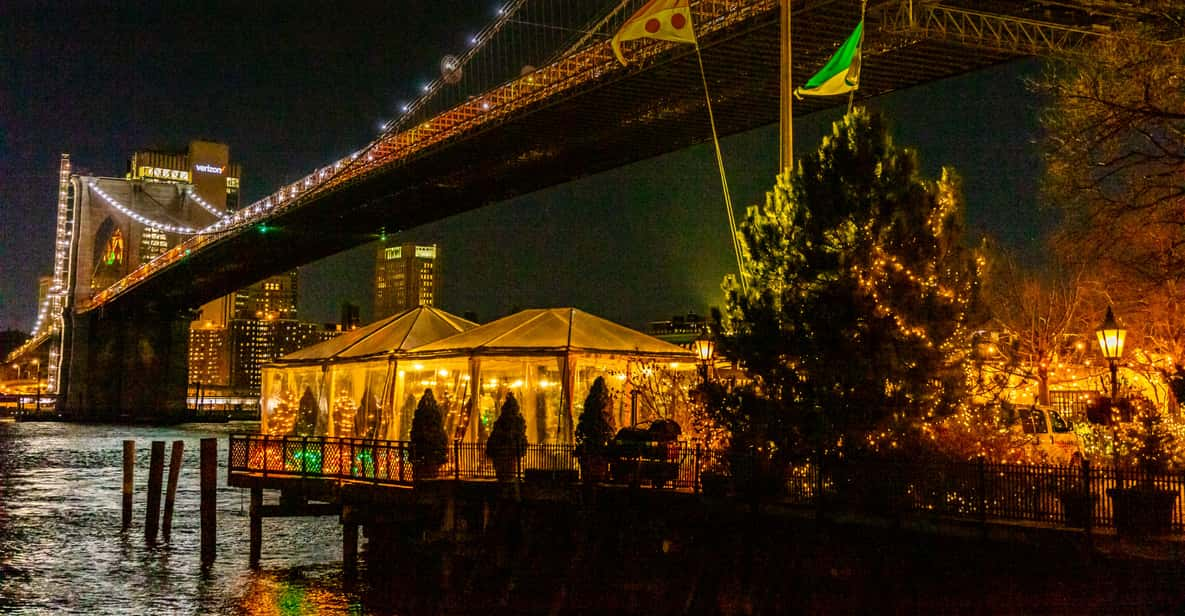
Board a heated bus from Midtown Manhattan, follow your guide to the brightest Dyker Heights blocks, and cancel free up to 24 hours ahead.