
3.5 hours
5.0(4)
NYC: Dyker Heights Christmas Lights Private Tour
Free cancellationHotel pickup included

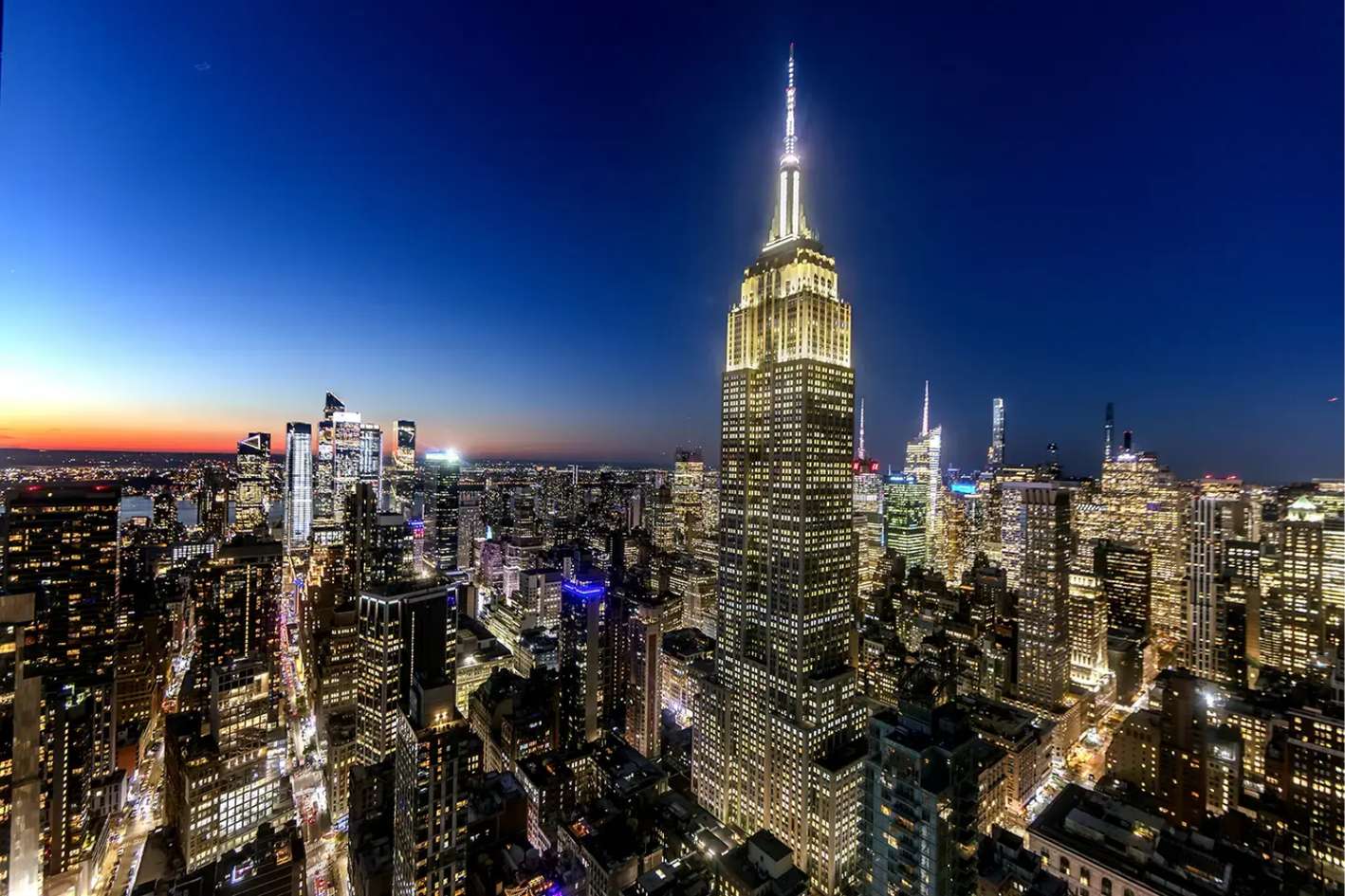
See the best Christmas lights in New York City without freezing on a subway platform. Hop a heated bus from Midtown, walk the glowing blocks of Dyker Heights with a guide, and catch the skyline from Brooklyn Bridge Park on the way home.
"The tour was amazing! Stefan spoke perfect German and English, and his little jokes were hilarious. Our driver Mister George got us everywhere safely. We'd book this tour again anytime. Thanks for everything!"

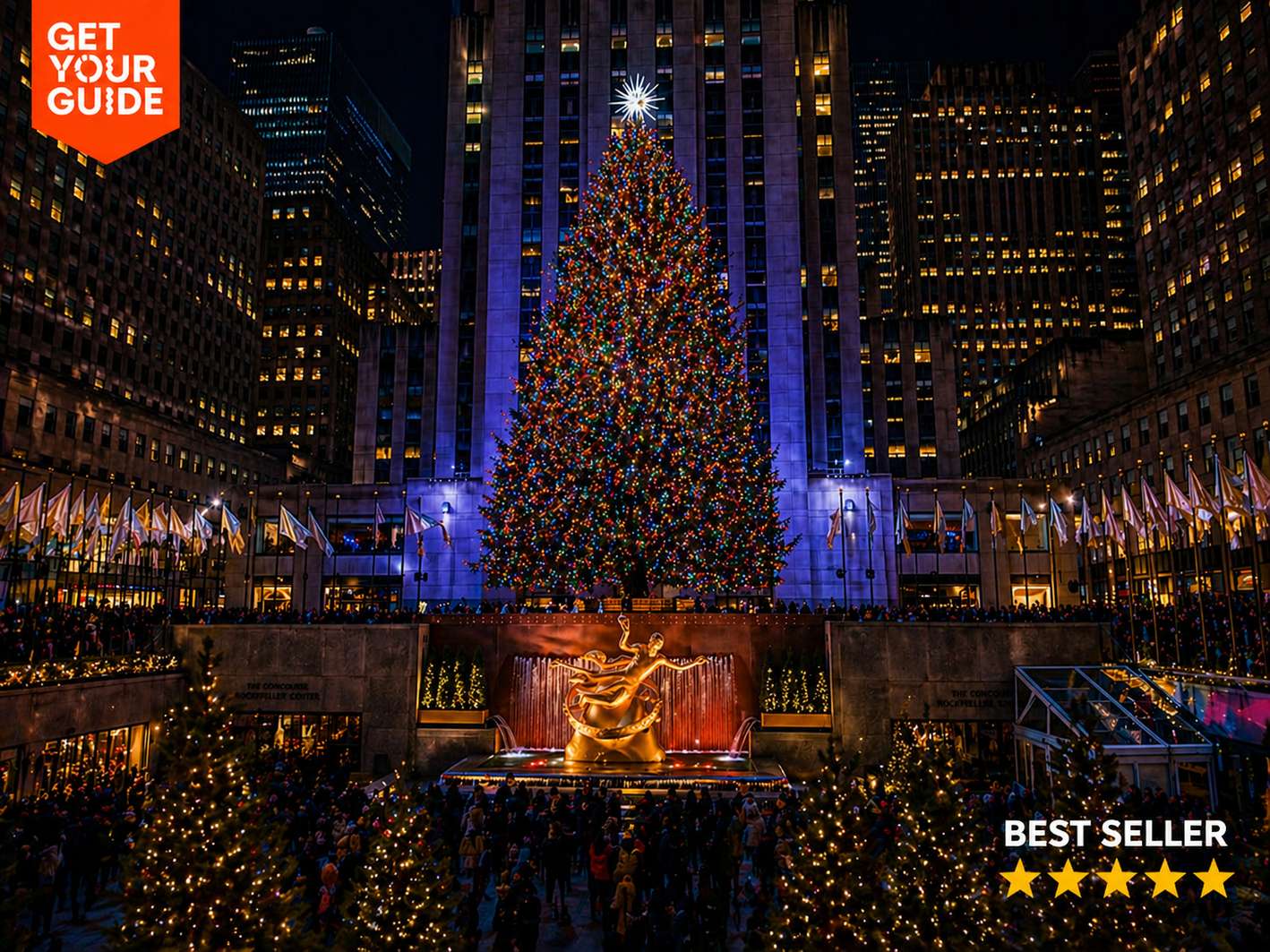
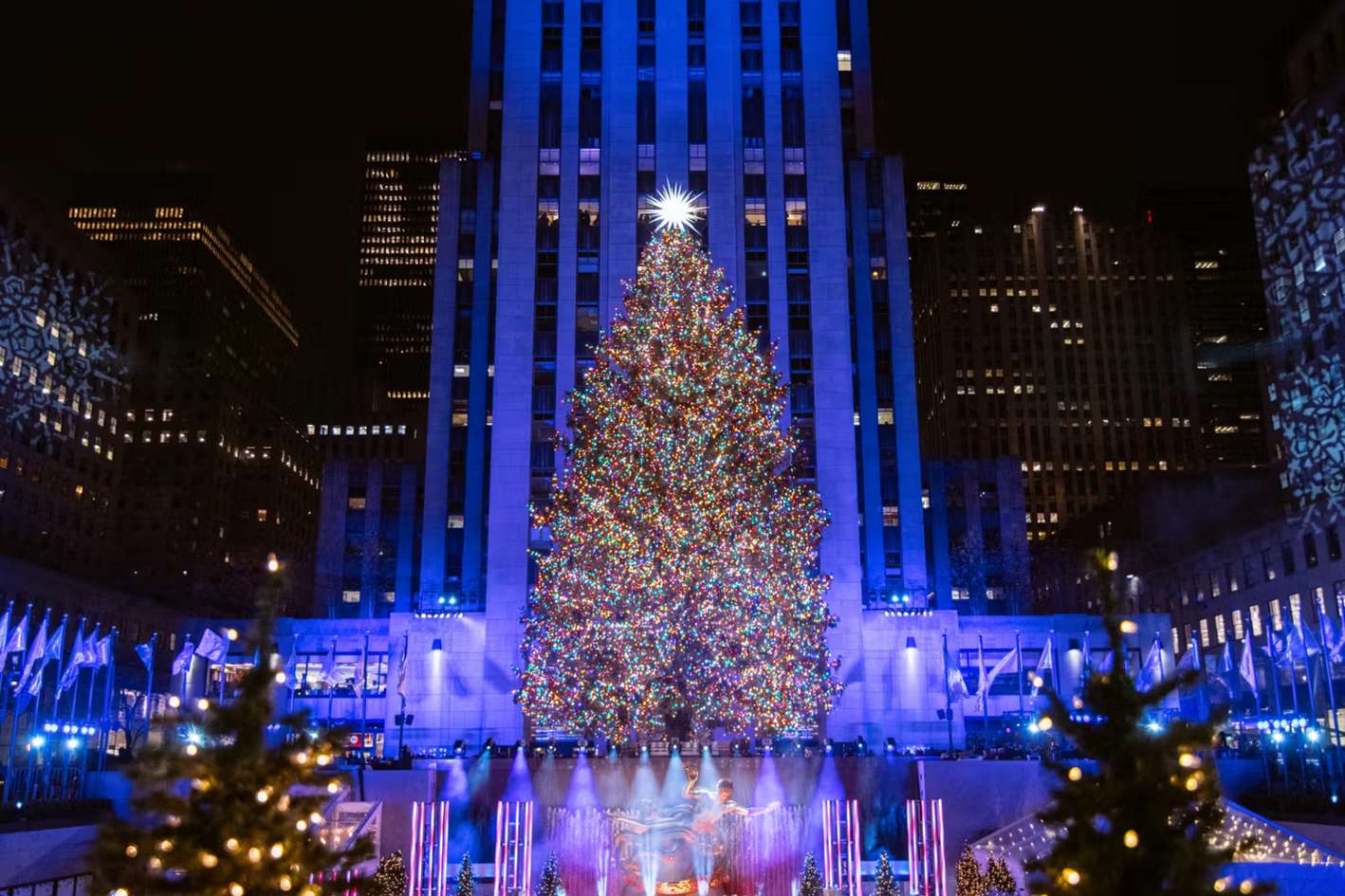
The giant Midtown tree burns from dawn to midnight once it is lit, and standing in the plaza costs nothing.
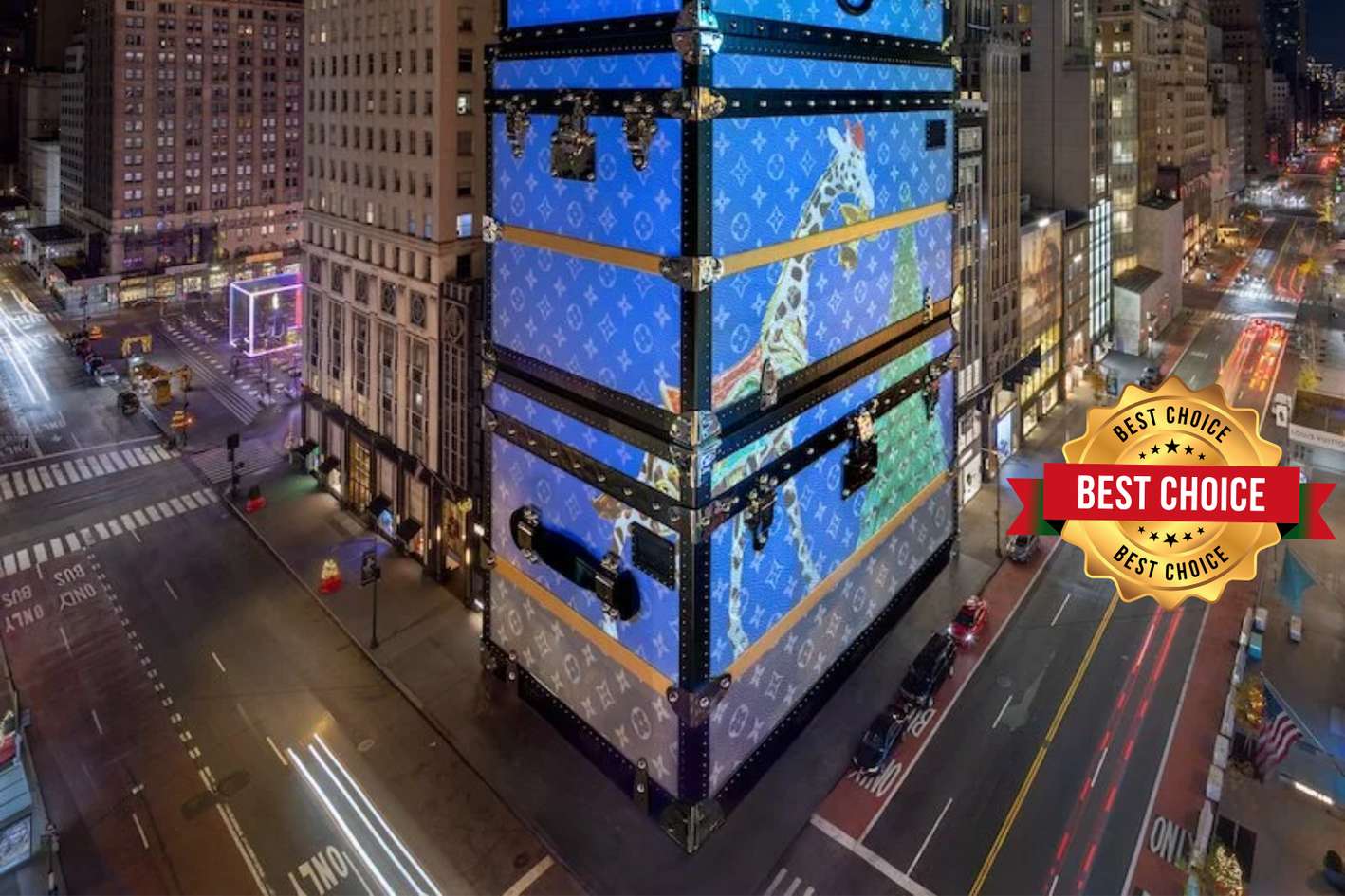
Read the guideSaks throws a light show across its whole facade, repeating every ten to fifteen minutes after dark.
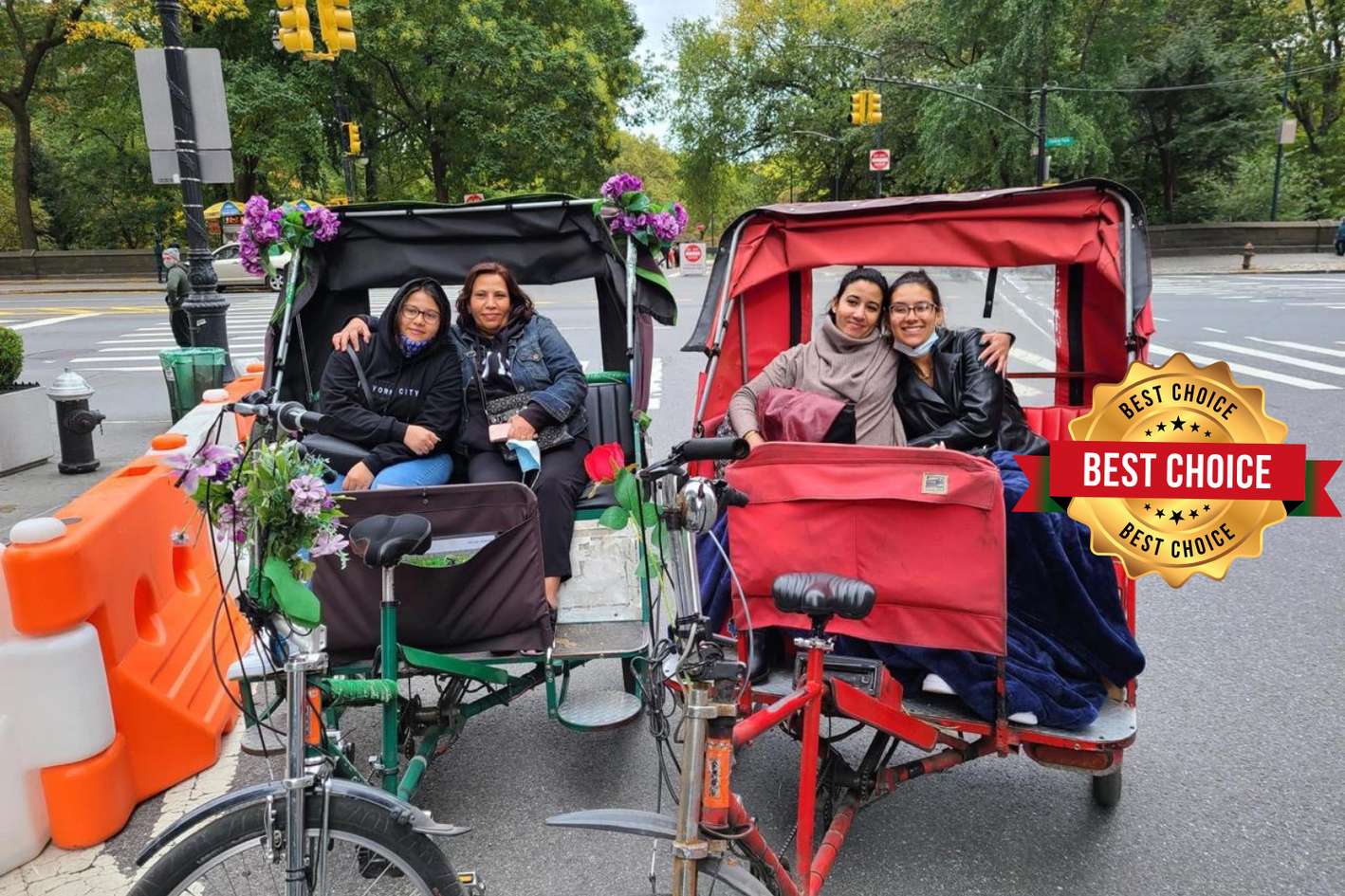
Read the guideThe park glows at Wollman Rink and on the Harlem Meer, and a ride gives you a seat under the skyline.
Read the guide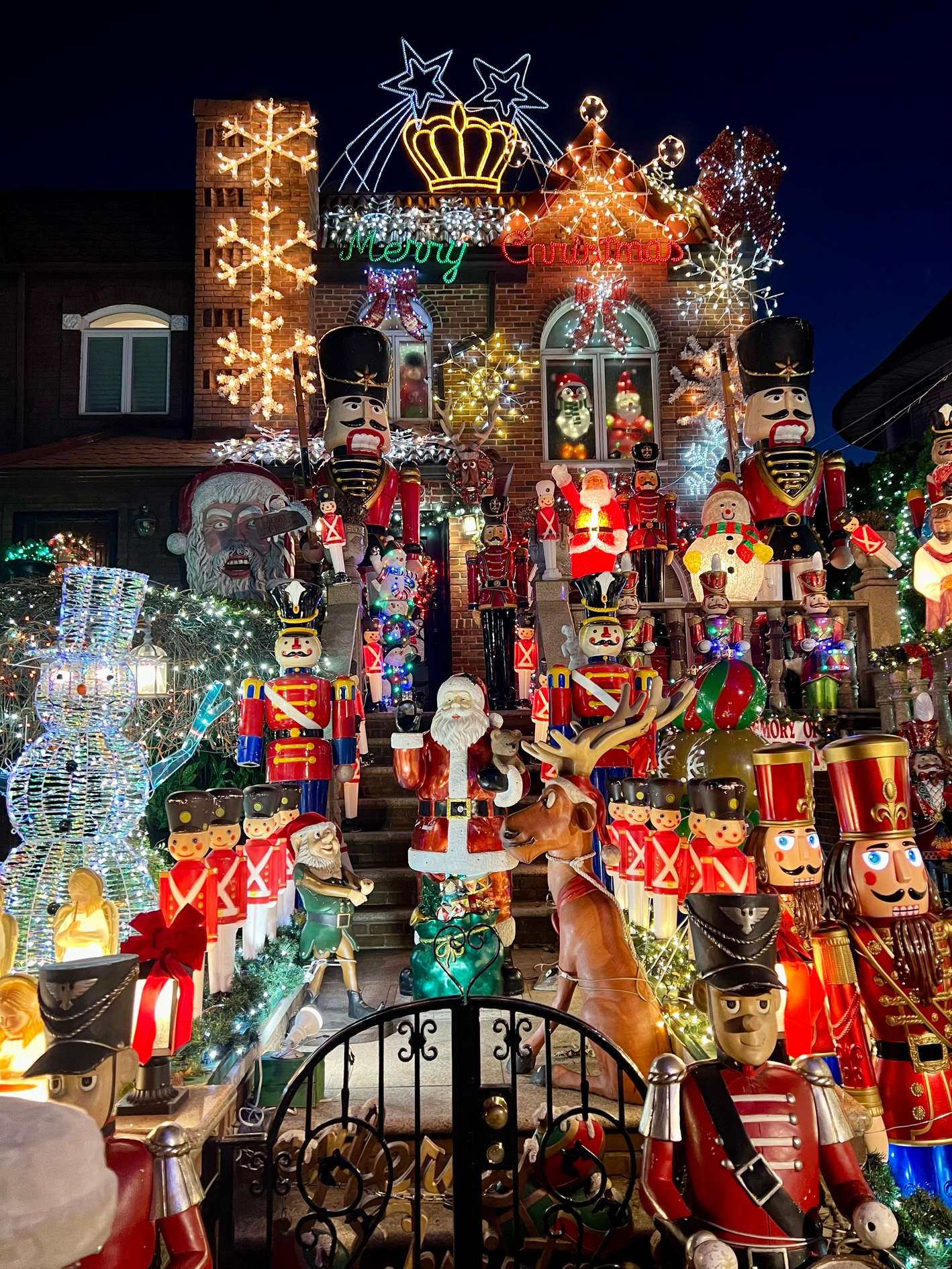
A guided walk puts you at the curb in front of the best displays, through cold and crowds and all.
Read the guide
A mile of lit tunnel and dancing bears drifts past the windshield while your radio plays the soundtrack.
Read the guide
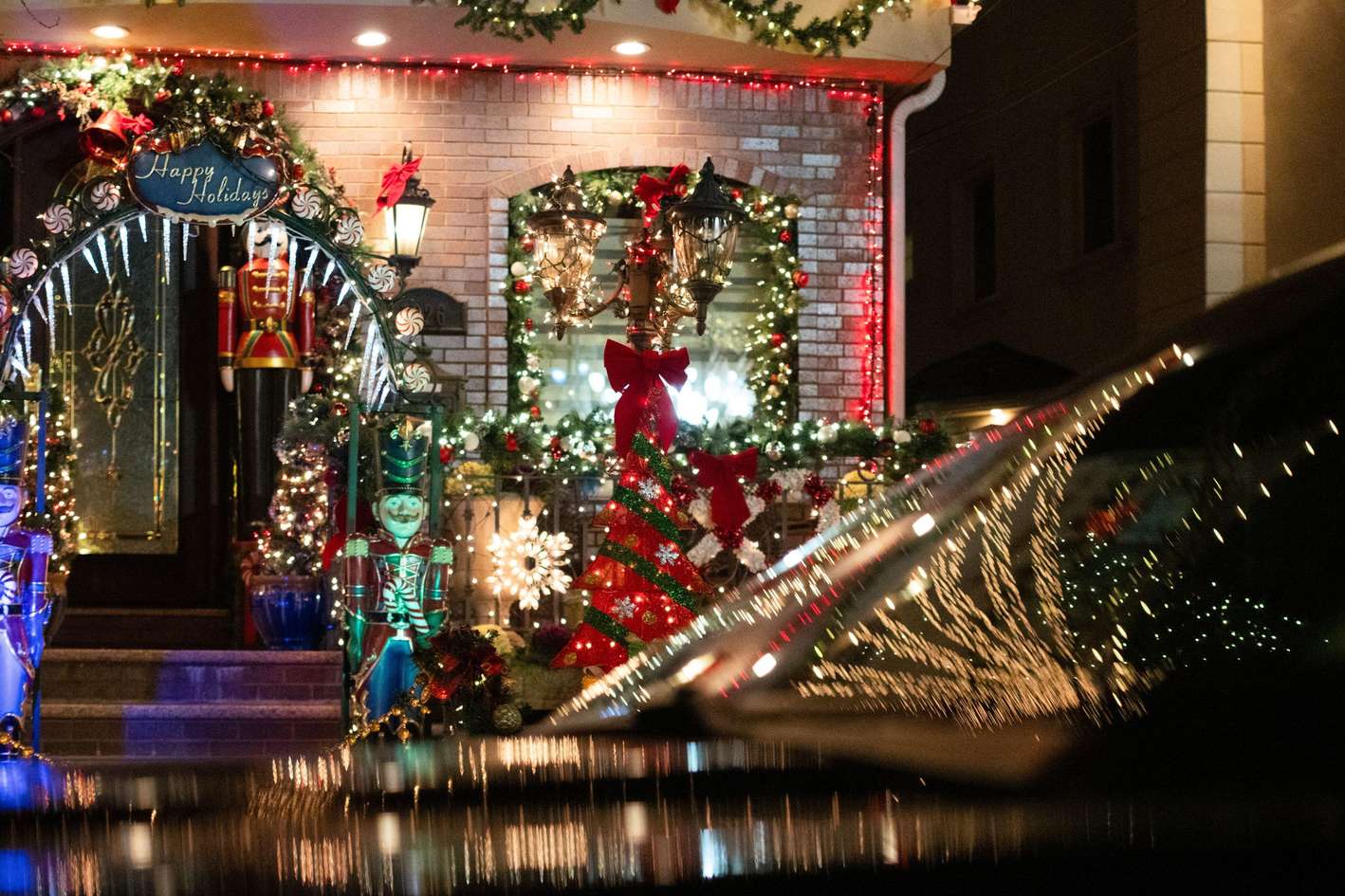
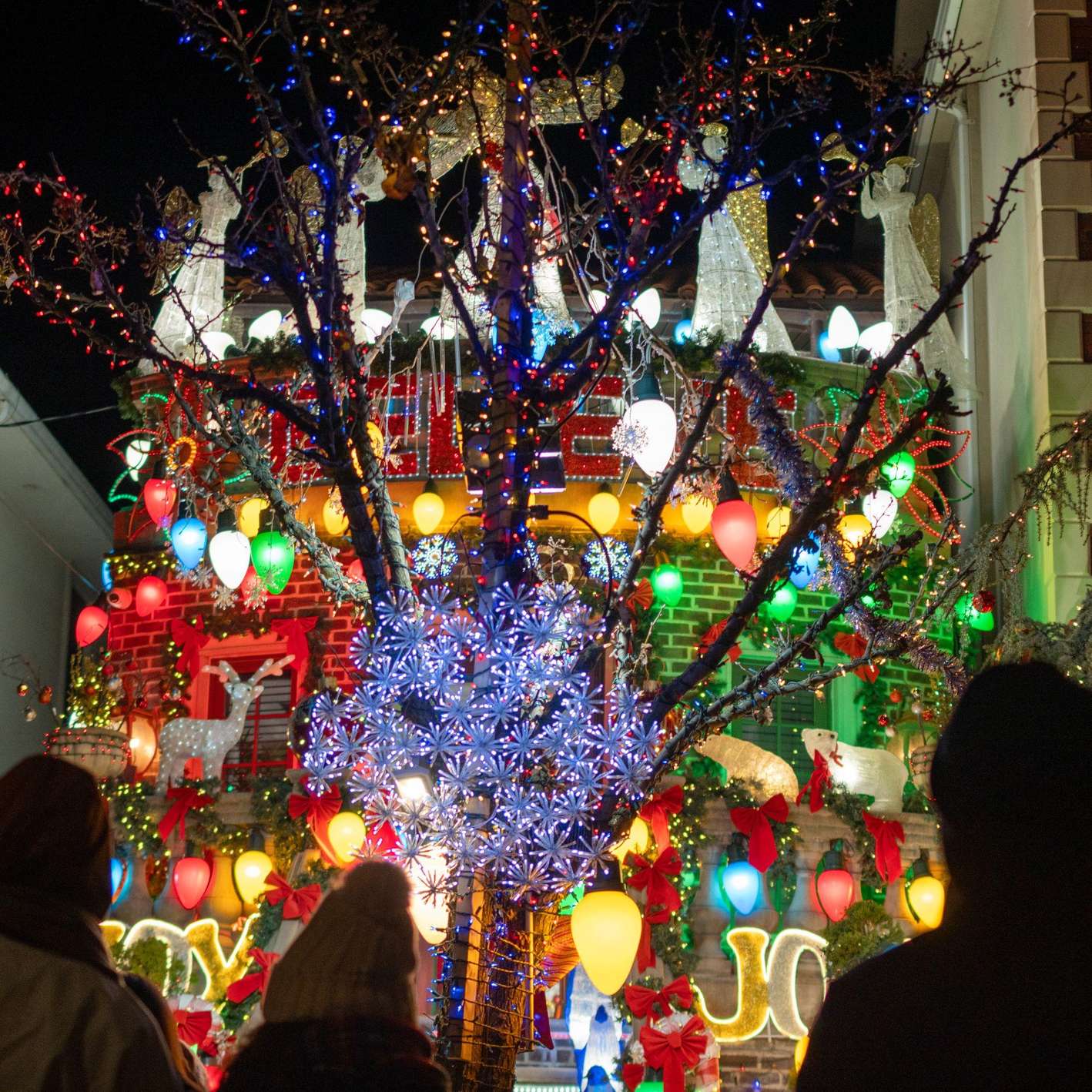
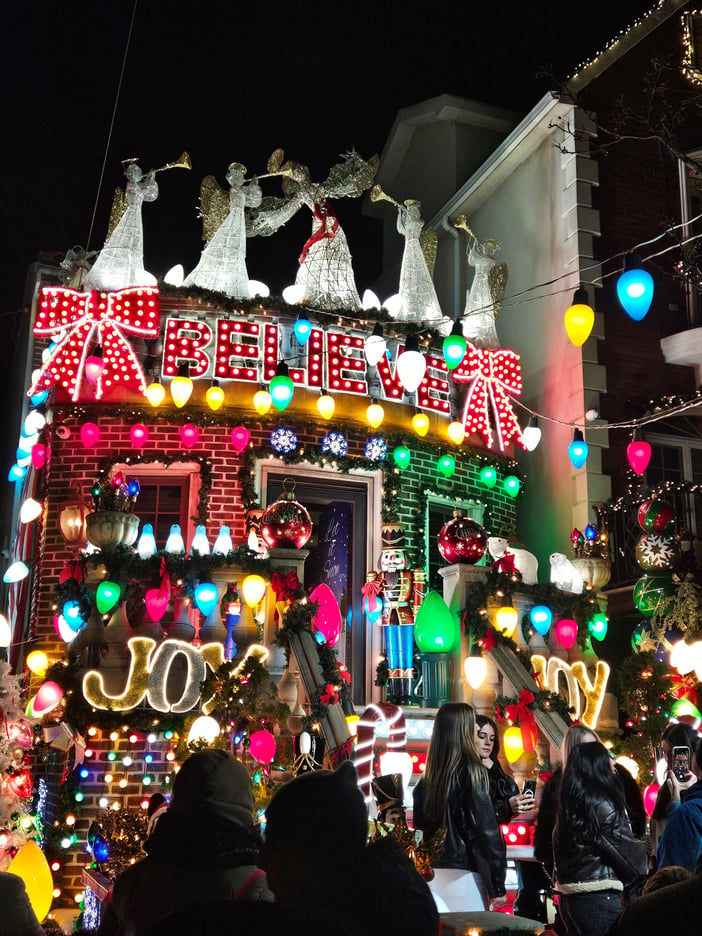
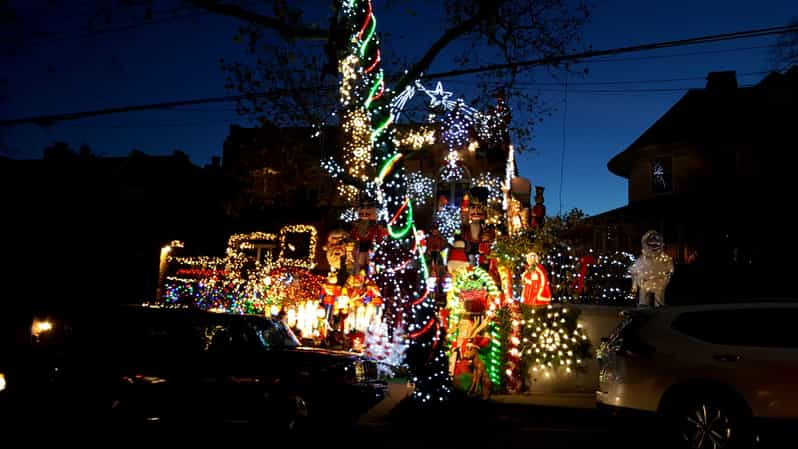
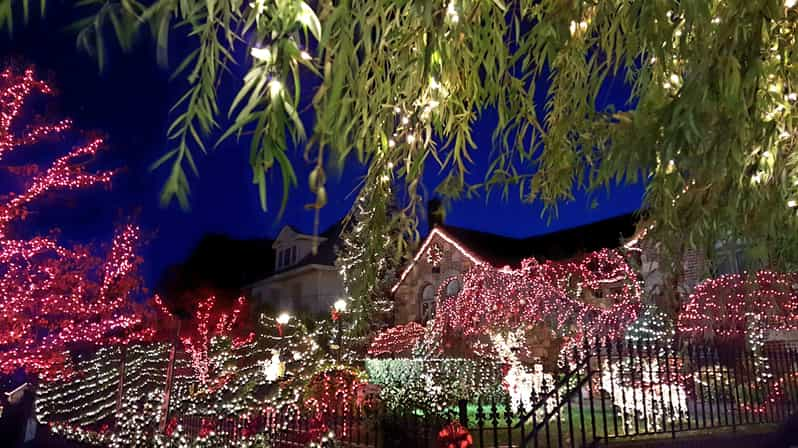
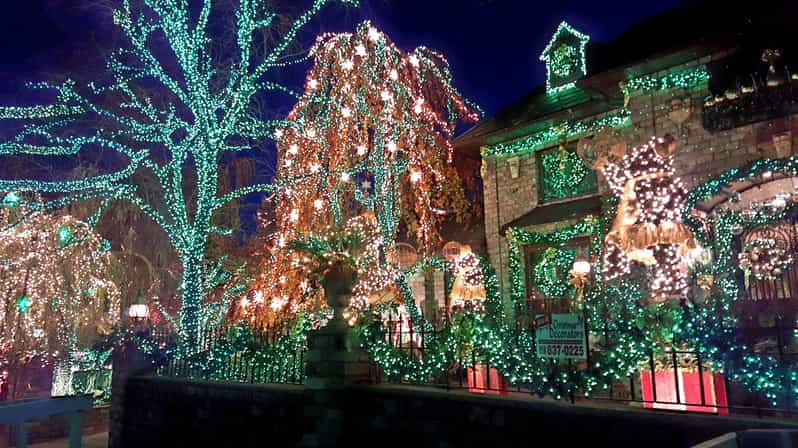
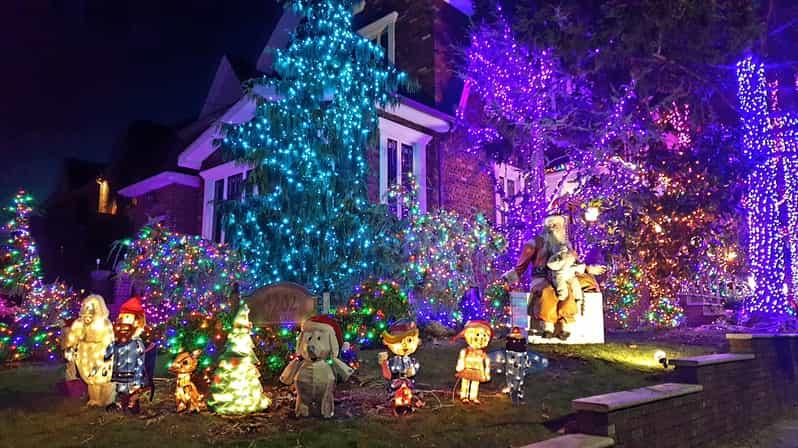
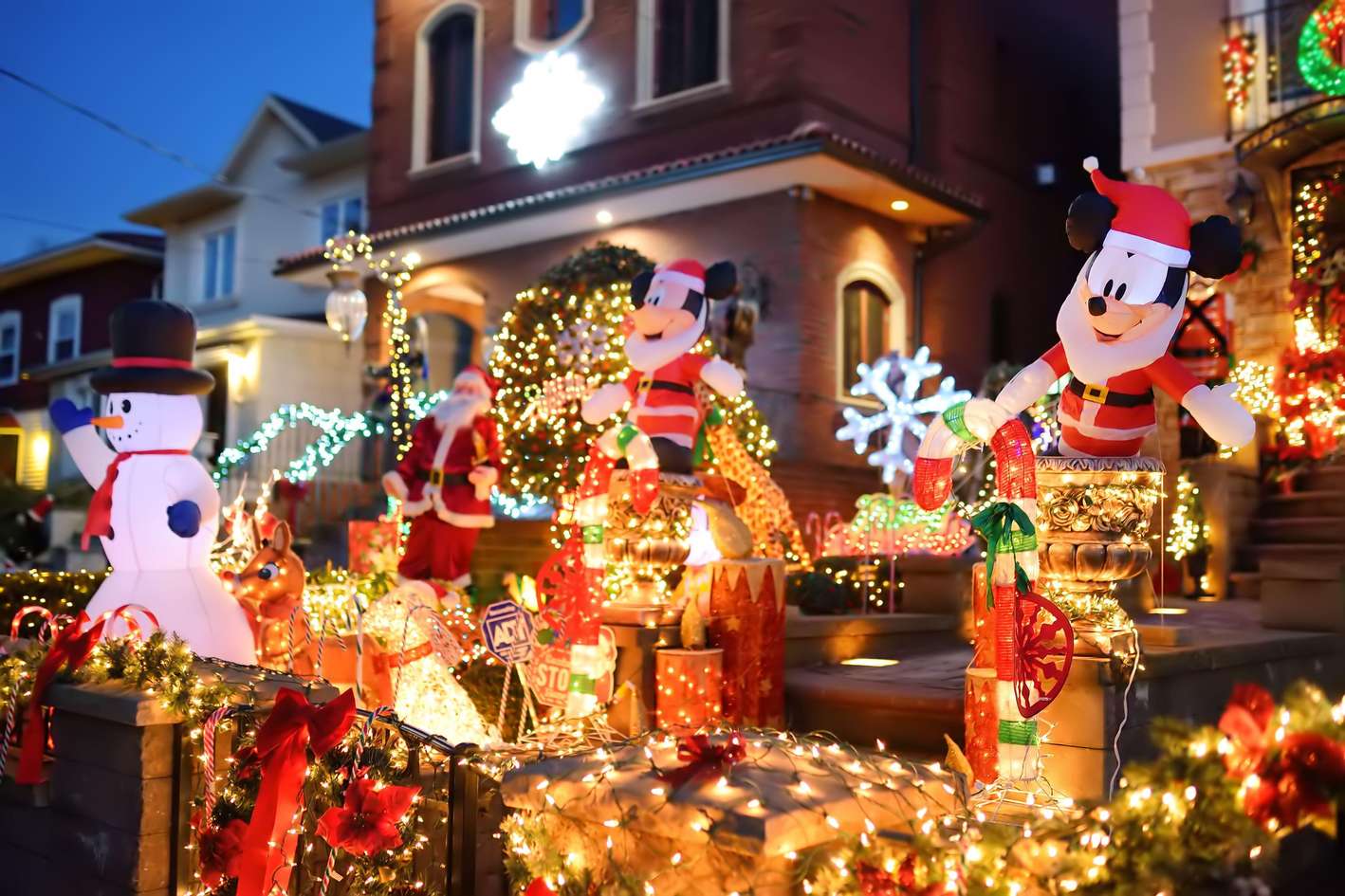
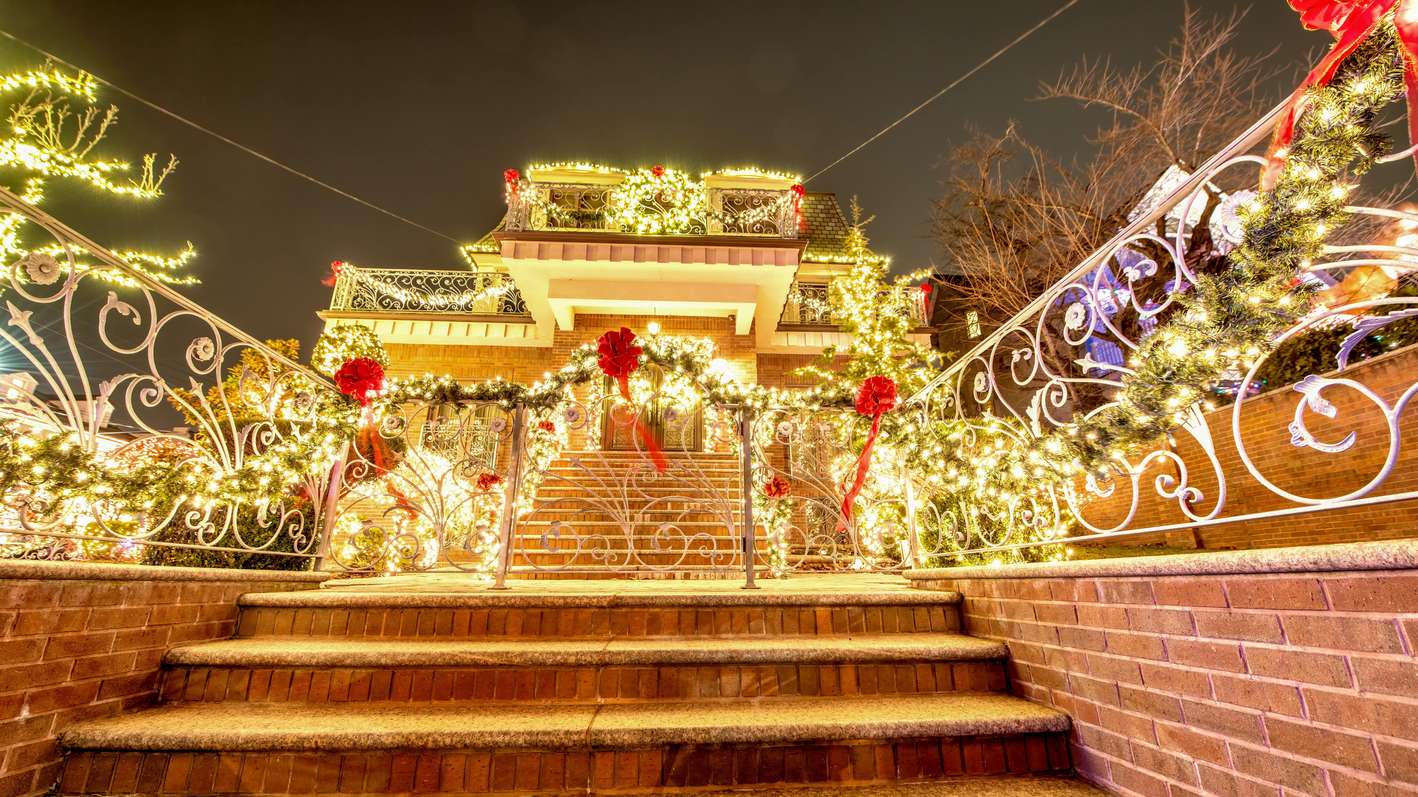
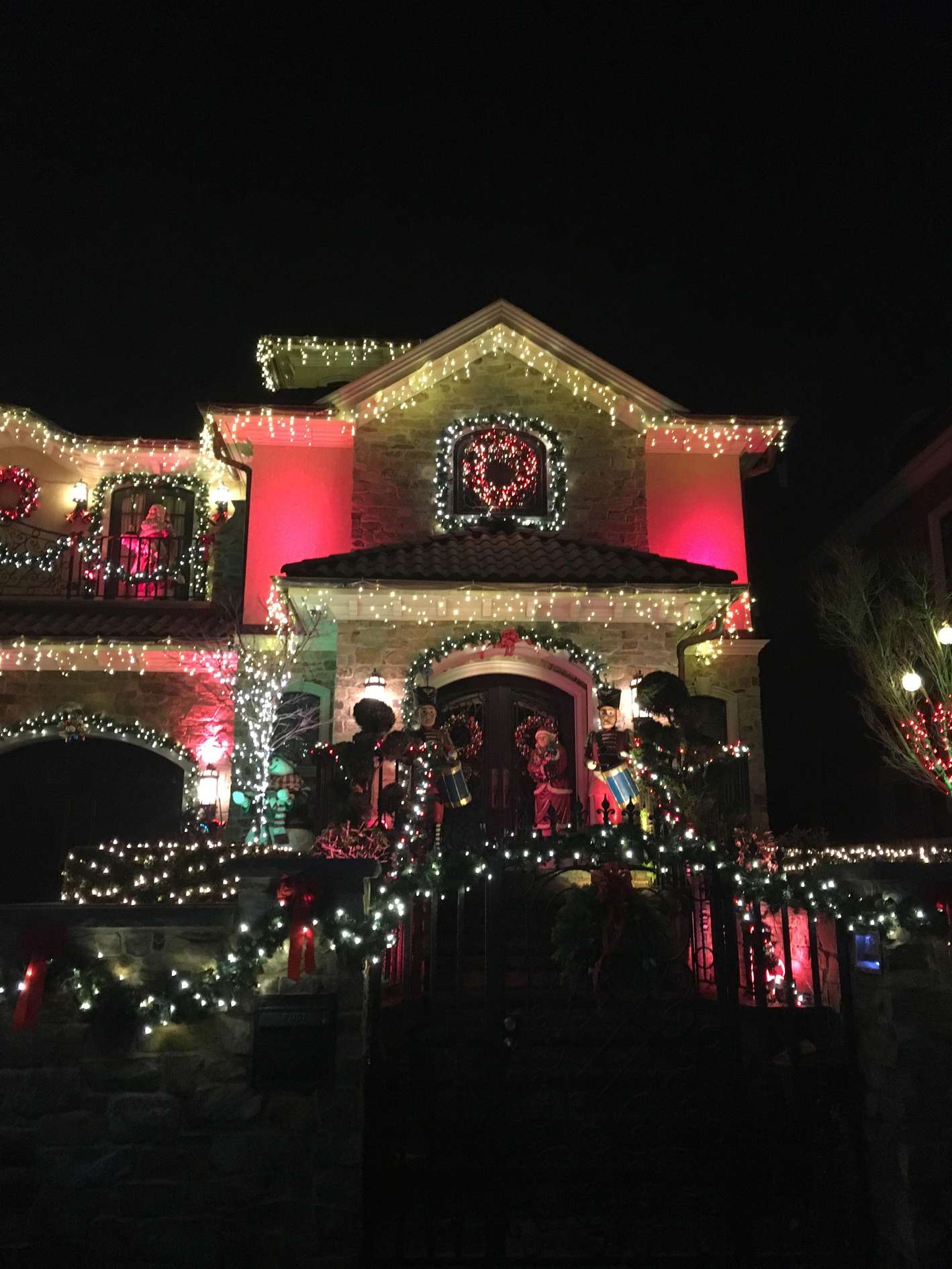
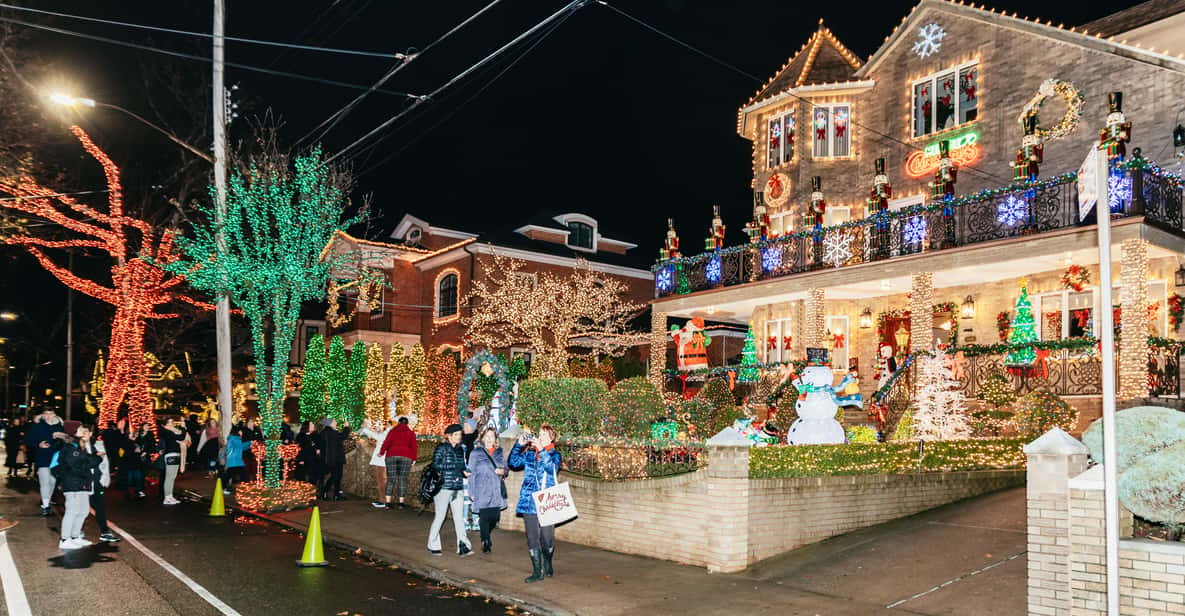
Hundreds of private houses between 11th and 13th Avenues glow with displays homeowners pay for themselves.
Read the guideEach of these displays asks something different of your evening, and the one you pick decides how much walking and cold you take on.
The city's giant tree, free to see every day of the season
The big Midtown tree runs on more than 50,000 LED lights under a star set with three million crystals, and anyone can stand in the plaza and look up at it for free. After the switch is flipped on the Wednesday after Thanksgiving, it burns from 5 in the morning until midnight through early January.
Come early or late if you hate crowds. Peak December evenings slow walkers to five minutes a block, and on lighting night the surrounding streets close for the ceremony. On a weekday morning the tree is almost yours alone.
A light show across the Saks facade and windows down ten blocks
Windows run down Fifth Avenue from the park at 59th Street to Macy's at 34th, and the strongest of them sit between 49th and 59th. Saks spreads a light show across its whole facade, replaying every ten to fifteen minutes from late afternoon until late at night.
Timing decides it. Weekday mornings give you the window details up close with room to stop, but the facade show only runs after dark. Sidewalks jam between 7 and 9:30 pm, and after that the avenue opens up while the facade keeps glowing.
Glowing rink, lit trees on the lake and the movie spots under a blanket
Central Park does not string its paths with lights, and that surprises people. What it has is Wollman Rink glowing under the Midtown skyline, a flotilla of lit trees floating on the Harlem Meer, and the movie spots from Elf and Home Alone 2.
The rides are the point. Drivers hand out lap blankets, but you still dress for the wind.
See the displays at street level, with a guide who knows the blocks
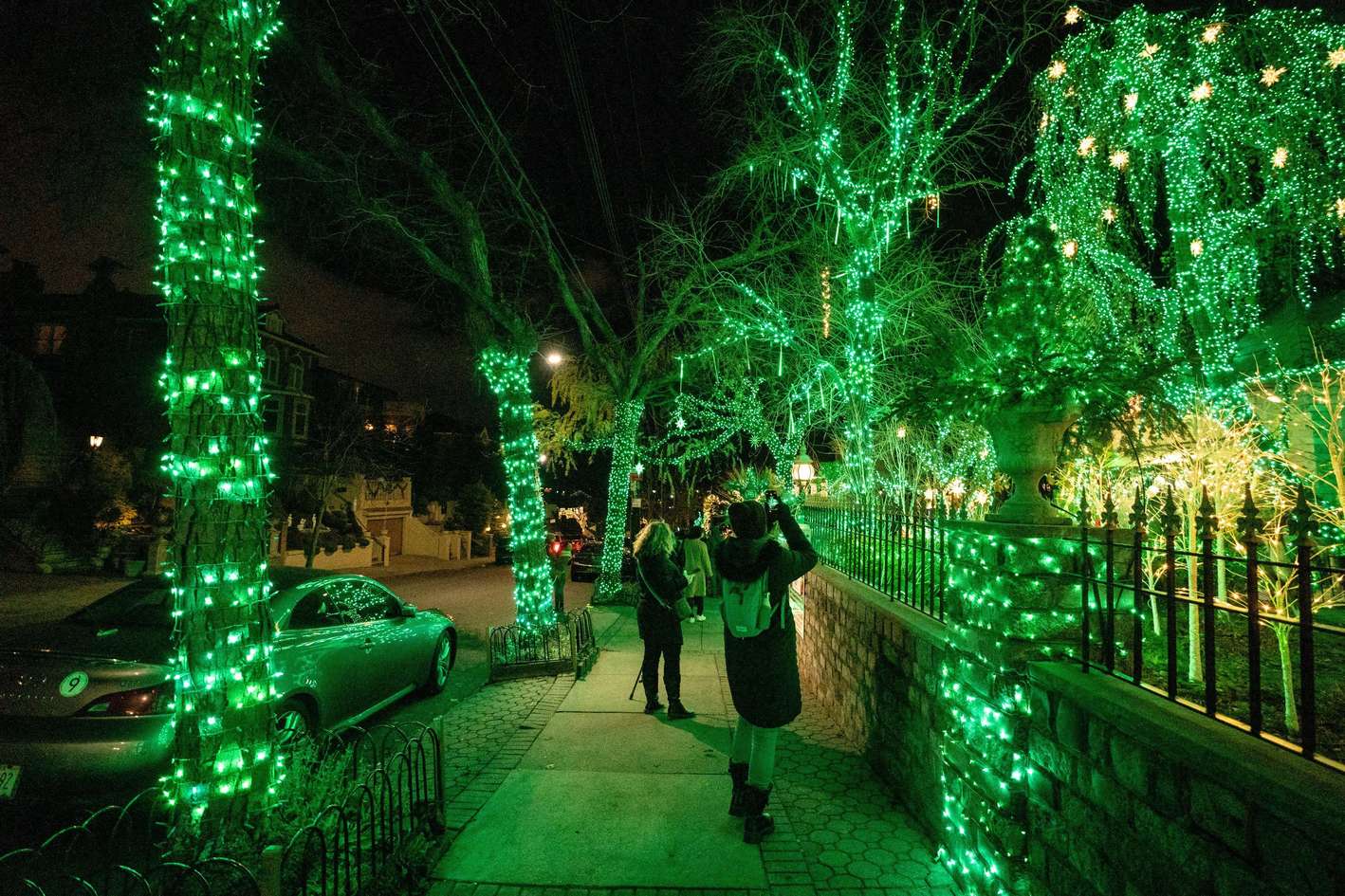
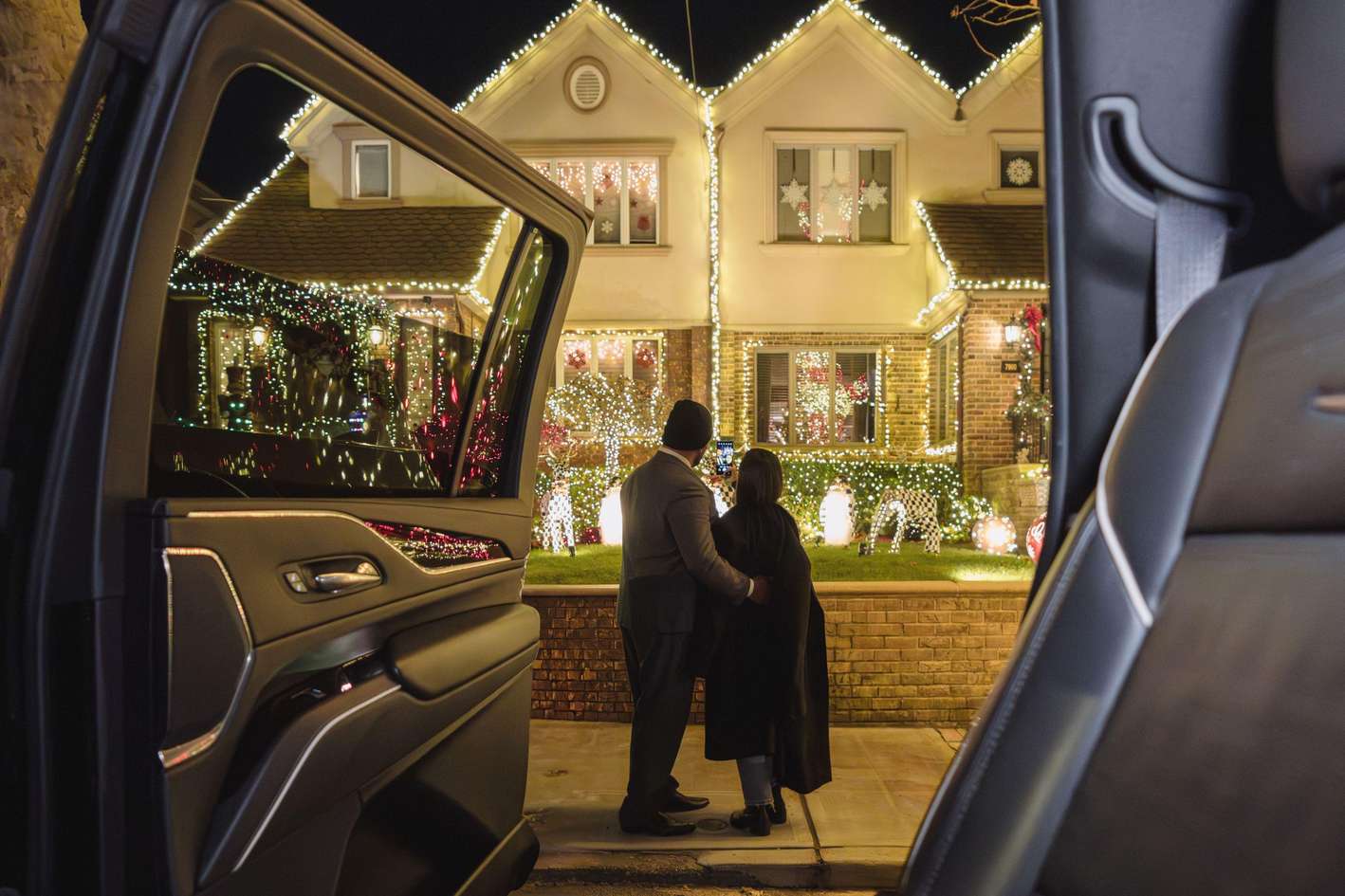
Seeing the lights on foot changes the night. Walking tours cover two to three miles, some up to three hours in the cold, and one fast-paced Brooklyn route is not recommended for children.
Even on a bus tour you walk 45 to 60 minutes once you arrive, because the houses cannot be seen from the road.
The walk to the displays is the part that decides it. From the nearest subway station it is 15 to 20 minutes uphill through dark residential streets, each way, in freezing air. Tours run rain or shine, snow included.
3 hours · ★ 5.0 (3)Dyker Heights: Walking Tour of Thousands of Holiday LightsFrom $47 4.5 - 5 hours · ★ 4.7 (40)New York City: Dyker Heights Christmas Walking TourFrom $45 4 hours · ★ 4.7 (1,203)NYC: Dyker Heights Christmas Lights & Skyline View Bus TourFrom $69  3.5 hours · ★ 4.6 (29)NYC | French guided tour of Christmas in BrooklynFrom $79
Two million lights past your windshield, radio synchronized, no walking

A drive-through show means you never leave the car. Skylands Stadium in New Jersey strings a mile-long course with more than two million lights, a half-hour crawl past a light tunnel, skating bears and scooter-riding elves, and its Christmas Village is free to enter.
These events sit well out of the city, 60 to 90 minutes of driving each way. The two-and-a-half-mile course out at Jones Beach can stretch toward two hours in the car on a busy weekend night. They run rain, snow or shine, which is why the warm car is the whole point.
A neighborhood of homeowners out-decorating each other, block after block

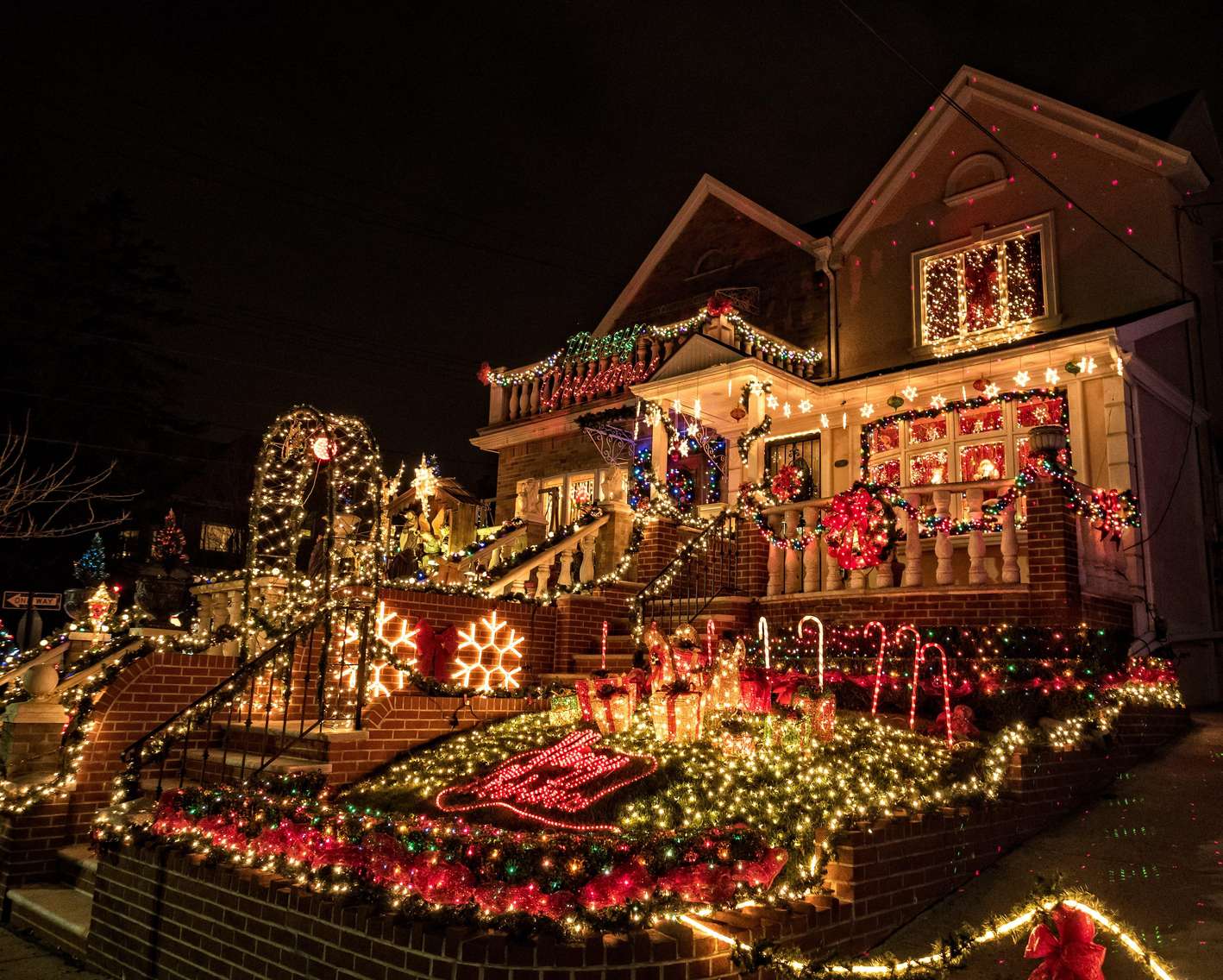
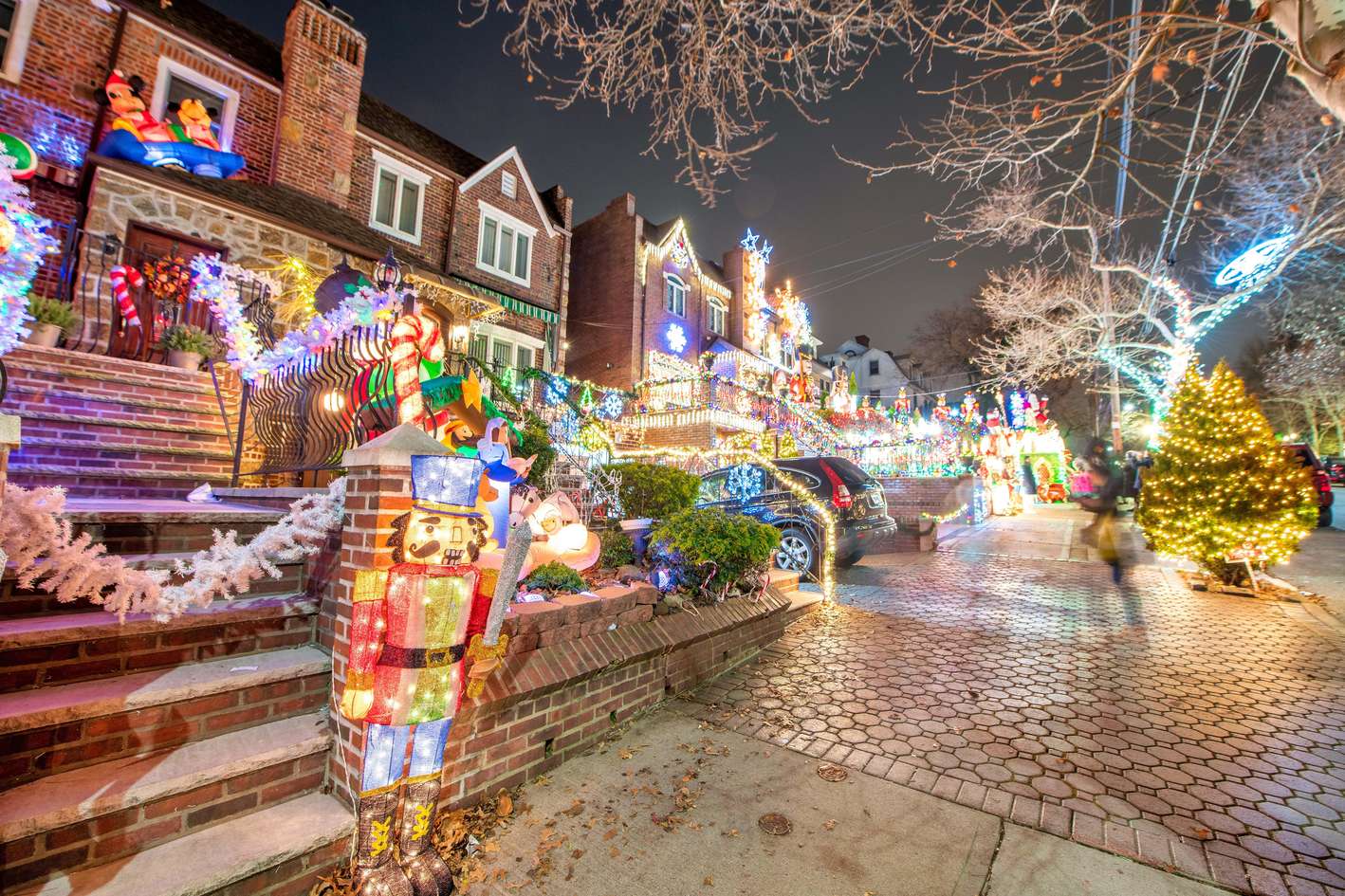
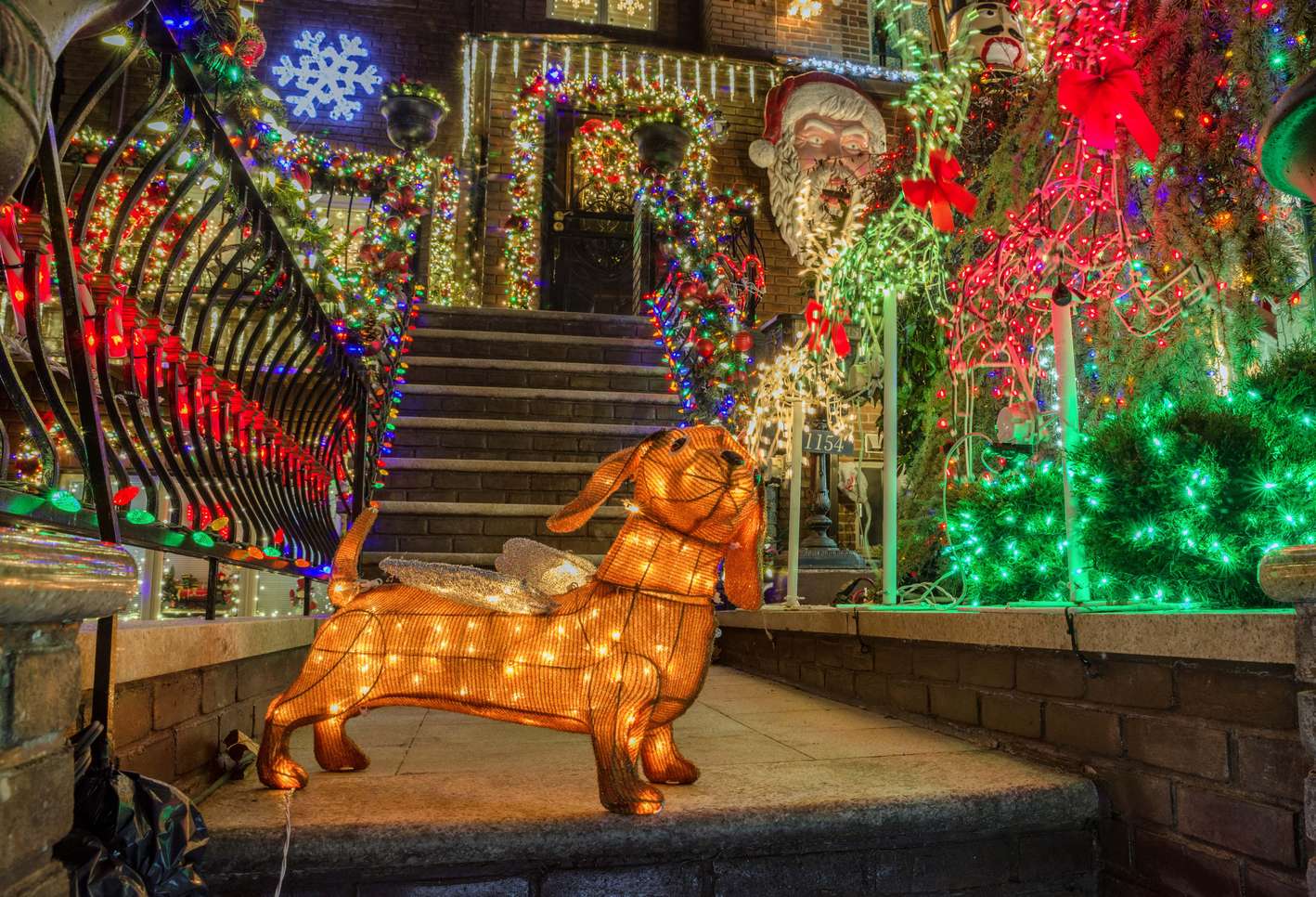
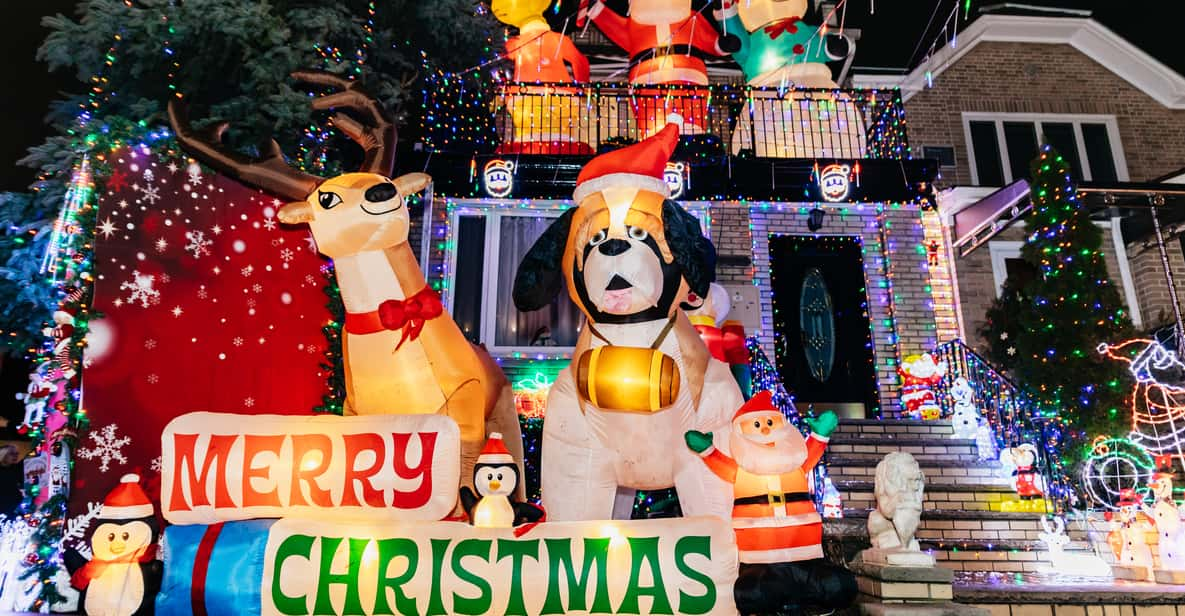
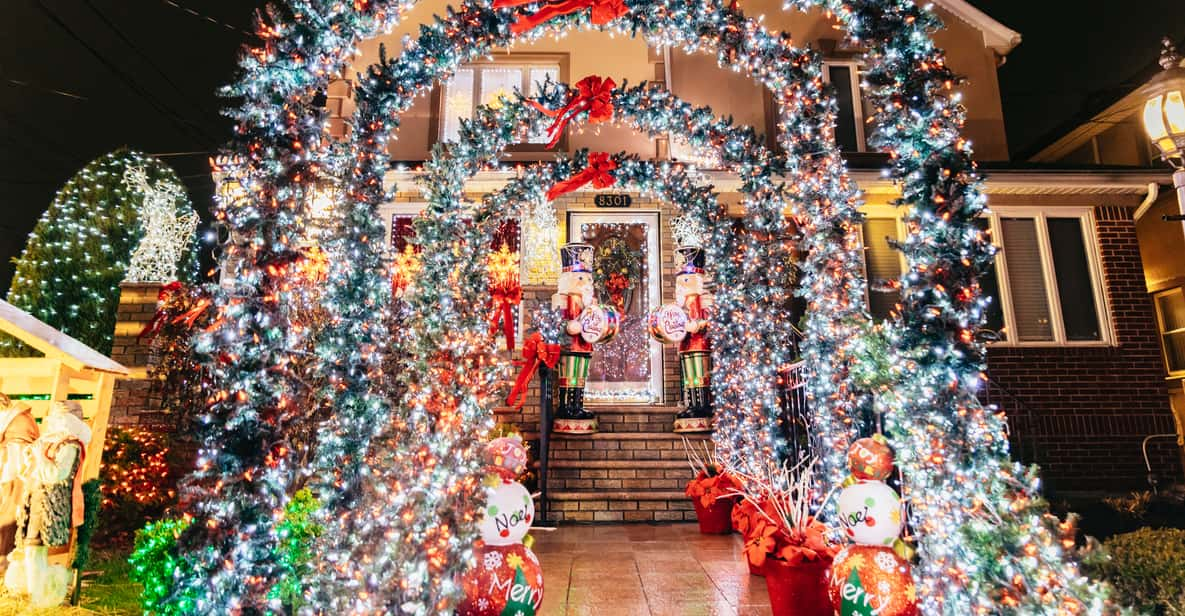
Dyker Heights is the densest collection of decorated homes in the city, a few hundred houses clustered between 11th and 13th Avenues around 83rd to 86th Streets. Homeowners fund the displays themselves, a friendly competition keeps them growing, and Lucy Spata's house started the whole thing in the 1980s.
It is free to walk past, and the streets go dark between 9 and 10 pm, so arrive by dusk. There are no public restrooms on the display blocks, so plan a stop in Bay Ridge on the way. Some houses collect charity donations; bring cash or use the QR codes.
4.5 - 5 hours · ★ 4.7 (40)New York City: Dyker Heights Christmas Walking TourFrom $45 4 hours · ★ 4.7 (1,203)NYC: Dyker Heights Christmas Lights & Skyline View Bus TourFrom $69 4 hours · ★ 4.6 (2,450)From Manhattan: 4-Hour Dyker Heights Holiday Lights Bus TourFrom $63  4 hours · ★ 4.6 (1,008)From Manhattan: Dyker Heights Lights Tour with Skyline ViewsFrom $49
Six very different glow-ups across two boroughs, one cold night to spend on them. Ranked below: Manhattan's polish against Brooklyn's house lights, and the warmest way to reach both.
Dyker Heights in Brooklyn is the densest, most over-the-top display in New York City and worth the trip at least once.
The big Midtown tree is free to view, lit daily from 5 am to midnight into mid-January.
Everything is lit by Thanksgiving except the big tree, which stays dark until its ceremony the first week of December.
Weekend evenings between 6 and 9 pm are the crush; weeknights and after 9 pm give you the same lights with room to breathe.
Walking the displays themselves is the rule: the Dyker houses cannot be seen from any bus window.
Book your tour as soon as your travel dates are set, or pick a Monday through Thursday evening, when slots stay open longer and the sidewalks are calmer.
Brooklyn is the answer. Dyker Heights, a few blocks of houses between 11th and 13th Avenues around 83rd to 86th Streets, out-glitters anything Midtown can stage, and people who make the trip out say it is worth it at least once. The full neighborhood guide is worth reading before you go.
Second comes the giant Midtown tree: more than 50,000 LED lights under a Swarovski star set with three million crystals, and standing in the plaza costs nothing. Fifth Avenue's store windows run third, ten blocks of retail artistry between 49th and 59th Streets.
Bryant Park's Winter Village pairs its tree and lights with free ice skating, and Hudson Yards strings over two million lights across its blocks. The regional drive-through shows come last only because the drive eats the evening; for families who want two million lights from a car seat, they beat the lot.

Midtown does scale by committee. The tree, the Saks facade show, the window art at Bergdorf Goodman, where one 2024 display set a praying mantis with 100,000 rhinestones. Corporate budgets buy polish, and the sidewalk moves at its own slow pace on peak nights.
Dyker Heights does it house by house. Homeowners hire professional installers and out-spend each other season after season, and the sidewalk stays a normal suburban width while the crowds pile on. It is competitive, personal and slightly absurd, which is the point.
The outliers sit outside both. Central Park strings no lights on its paths; its glow is Wollman Rink under the skyline and a seated ride. The drive-through stadiums play their shows to your car radio. Decide which atmosphere the evening is for before you decide anything else.
| Dyker Heights | Midtown Manhattan | Drive-through shows | |
|---|---|---|---|
| Atmosphere | Private houses competing block by block | Corporate trees, facade shows and retail windows | Animated scenes synced to your car radio |
| Where | Residential Brooklyn, far from Midtown | A walkable core from 34th to 59th Streets | An hour or more outside the city |
| Best for | Travelers who want the wildest house lights | Walkers who like window detail and the famous tree | Families who want to stay warm in the car |
Read down the rows and the choice narrows fast. Pick the atmosphere first, then the neighborhood, because the clothing, the timing and the transport all follow from that one call.
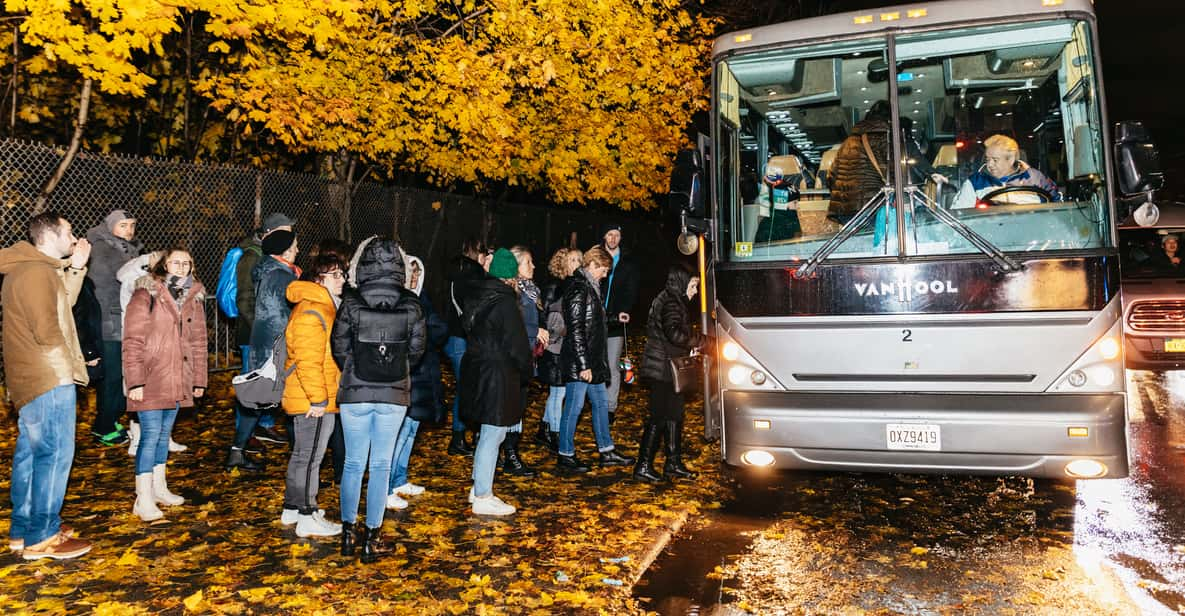
The subway is the cheap truth. From Midtown, the R train to 86th Street or the D to 79th Street takes about 45 minutes to an hour, and then comes the part that decides the night: 15 to 20 minutes uphill, nearly a mile through dark residential streets, each way, in freezing air.
A heated coach skips all of it. One option that runs this route is the "NYC: Heated Bus & Guided Dyker Heights Christmas Lights Walk": four hours, a warm bus from Manhattan, a licensed guide who walks you into the most decorated streets, and a seat to thaw in between stops.
Tours like these typically sell out about two weeks ahead in peak season, so book early.
Driving yourself is the last resort. Holiday gridlock turns the 40-minute run into a crawl, several display blocks close to through traffic, and parking is a fight you will lose.
Whichever row you land on, keep the evening to one borough. Trying to sweep Manhattan, Brooklyn and the Bronx into a single night cuts straight into your visiting time.

The windows and markets go up first. Department store displays along Fifth Avenue and the holiday markets are installed and fully active by Thanksgiving, and Hudson Yards turns its Shine Bright displays on in mid-November.
Dyker Heights follows the weekend after Thanksgiving. There is no official switch-on date because homeowners set their own timers, so on Thanksgiving weekend itself only about one house in five is lit; the weekend after, the neighborhood is awake. The tree is the holdout, dark until its ceremony the first week of December.
After Christmas, most of it keeps burning. Dyker Heights stays lit through the first week of January, with tours running into early January, and the big tree glows into mid-January.
Hotel rates drop and crowds thin while the lights stay on. One exception to plan around: many department stores dismantle their windows right after Christmas or New Year's Day.
January: 5 out of 5 for how busy it gets. Holiday light tours continue through the first week of January with roughly 12.6 hours of darkness a night, before neighborhood displays and Midtown trees come …
Tap a month to read it.
Friday through Sunday evenings are the crush, with foot traffic peaking between 6 and 9 pm, when tour groups and independent visitors converge. On the worst Midtown blocks, walking slows to five minutes a block.
Monday through Thursday changes everything. The same displays, the same lights, and room to stop and look. Early December weeknights are the sweet spot: fully lit, pre-peak, and quiet enough to hear yourself talk.
After 9 pm the pattern inverts by neighborhood. In Dyker Heights, homeowners start shutting their displays off between 9 and 10 pm, so late arrival means watching houses go dark block by block.
In Midtown it is the opposite: after 9:30 pm on a Tuesday or Wednesday, Fifth Avenue opens up while the facade shows keep running, and the tree at 11 pm on a weeknight is close to a private viewing.
Crowds remain smaller as lights first turn on.
Peak crowds fill pavements and slow walking.
Crowds thin out as homeowners turn off timers.
The marquee displays are free. Standing in front of the big Midtown tree, walking the Dyker Heights streets, watching the Saks facade light show from across Fifth Avenue, and reading every window from Herald Square to 59th Street: no ticket, no reservation, no fee. The lights are on public sidewalks and residential streets.
The exceptions are ticketed. Brooklyn Botanic Garden charges admission for its evening Lightscape show, and the regional drive-through stadiums charge per carload. Everything else on this list, you pay for with a subway fare and a warm coat.
What does cost is what you add. Hot chocolate in Dyker Heights, a cocoa stop on some tours, a guided walk that finds the best houses. One thing to skip on the street: anyone selling attraction tickets in the tourist zones.
Buy from official booths and venues, and for a busy paid attraction like Santaland at Macy's, arrive half an hour before doors open instead of standing in the three-hour line.
Start at Saks at 49th Street and walk uptown toward 59th; that ten-block stretch holds the best of it, and the full windows guide covers every storefront.
The tree itself is a Norway spruce at least 75 feet tall, lit by more than 50,000 LEDs along five miles of wire, under a star carrying three million crystals, and the ceremony guide covers the night it switches on.
The vantage points matter. The Channel Gardens frame the tree between rows of wire angels, and from the top of those stairs the view runs straight down over the rink and the golden Prometheus statue.
Clear street-level views come from West 49th or West 50th, and the window at FAO Schwarz shows the whole tree from above if the plaza crowd wears on you.
For the Saks show, cross the street. Standing directly in front of the store puts you in barricaded pens where the crowd keeps moving; the steps of St. Patrick's Cathedral are calmer.
The show starts around 4:30 pm and replays every ten to fifteen minutes until late. On tree-lighting night the surrounding streets close for the ceremony, so see the tree another evening and walk the route on a weeknight.
Stand at the top of the stairs on Fifth Avenue and the tree lines up between the wire angels, the best photo angle there is
From inside the toy store, the tree shows from above, clear of the plaza crush
The sidewalk in front of the store is a moving queue; the light show is watched from across the street
Cathedral steps give a calmer, raised view of the Saks facade than the Channel Gardens crush
Work these four into the walk and the evening changes. The pen in front of Saks moves you along whether you want it or not, while every one of these spots lets you stop, stand still and stay as long as the cold allows.
Central Park carries no miles of string lights, and that surprises people. What it has is different: Wollman Rink glowing under the Midtown skyline, a flotilla of lit trees on the Harlem Meer, and the filming spots from Elf and Home Alone 2. The carriage ride guide covers the routes.
The rides are the point. Carriages stay strictly inside the park, so do not book one expecting the Midtown displays; they are a seat and a slow view instead of a push through packed sidewalks.
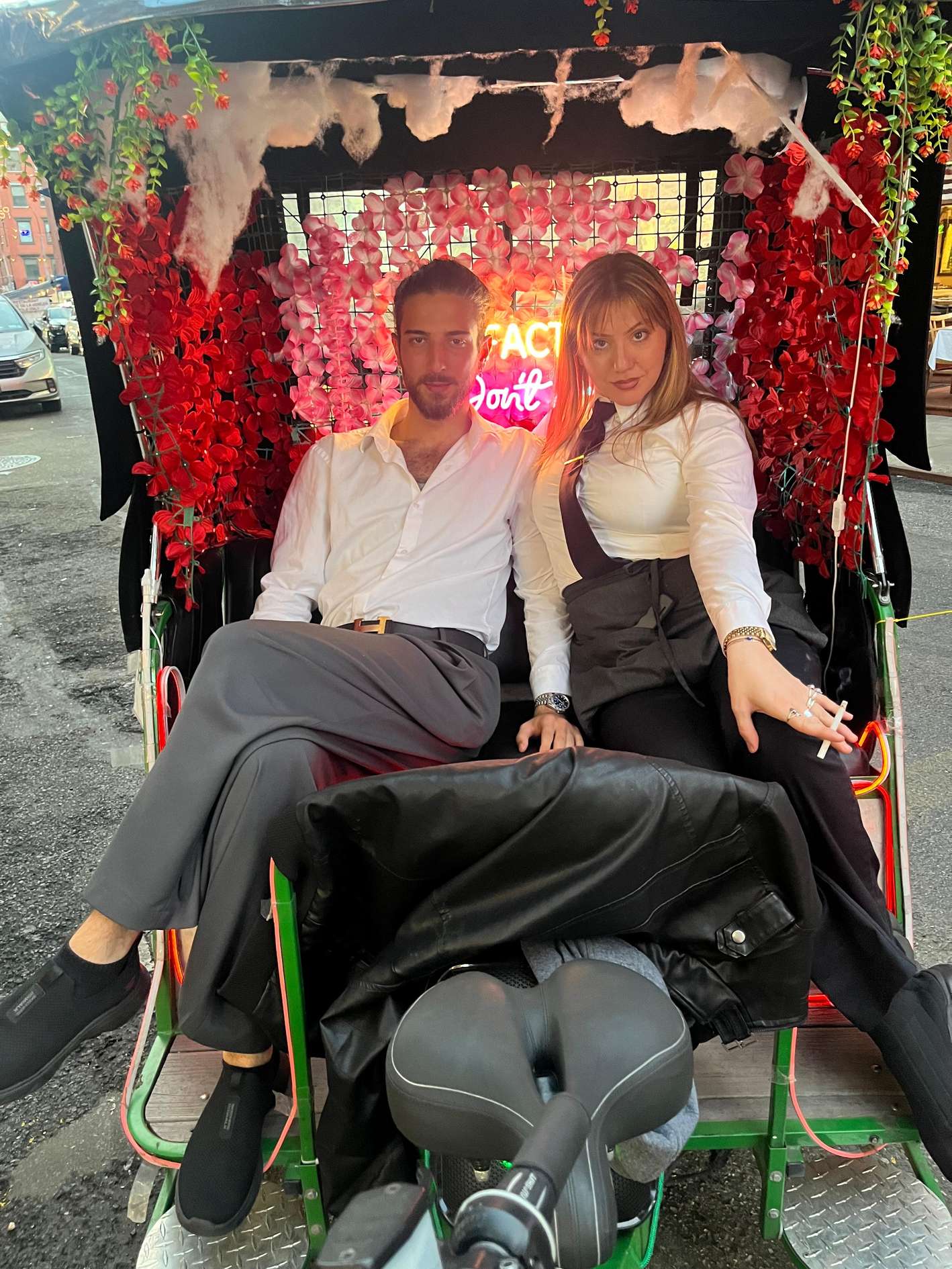
Pedicabs cover more ground, up to the northern end of the park on a three-hour ride, and reach spots a carriage cannot.
Time the departure for the light. Leaving between 3:30 pm and 4 pm puts landmarks in daylight and golden hour, with city and holiday lights switching on around 4:30 pm dusk.
Dress for the wind: drivers hand out lap blankets, but an open carriage at a December low near freezing still cuts through. By law the horses stop working if the temperature drops to 18 degrees Fahrenheit.
Three markets, three moods. Union Square is the biggest and oldest, more than 175 vendors around a holiday tree, photo booths and murals.
Columbus Circle sits at the southwest entrance to Central Park, over 140 stalls, free to walk through, running from late November through December 24. Bryant Park's Winter Village adds free-admission ice skating and a big tree to its open-air stalls.
The lights work as a destination in themselves: each market strims with twinkle lights and food stalls, and all three make a gentler stroll than the sidewalk crush beside Rockefeller Center. Getting there is easy.
Bryant Park sits on the B, D, F and M to 42nd Street, Union Square on a dozen lines at 14th Street, Columbus Circle on the 1, A, B, C and D, about 15 minutes on foot from Times Square.
The timing trick: go by day to eat without queuing, then return in the evening to shop under the lights. For a quieter browse, the walking tour guide covers market routes and lesser-known stalls, including the small holiday market on Macy's lower level.
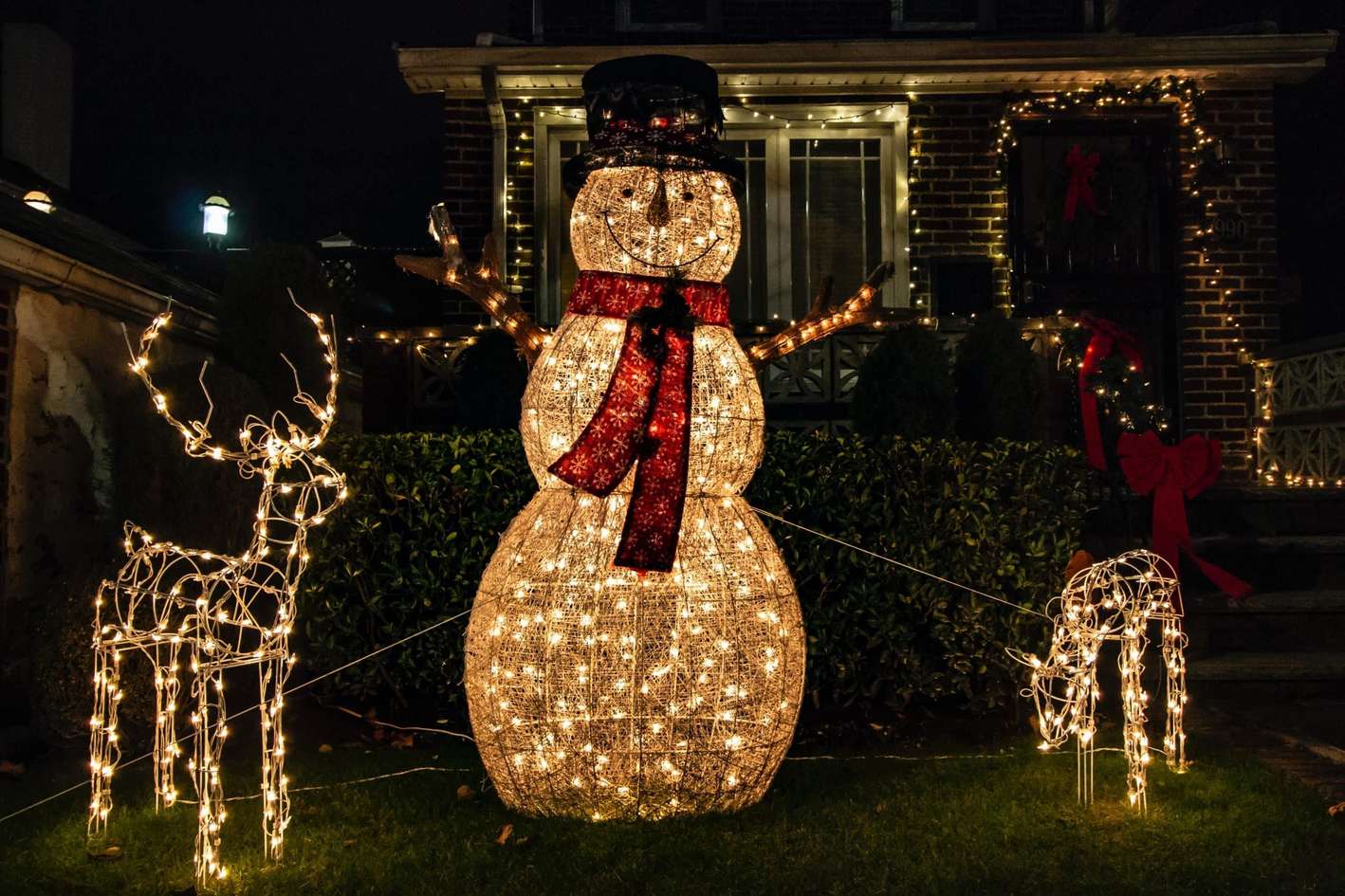
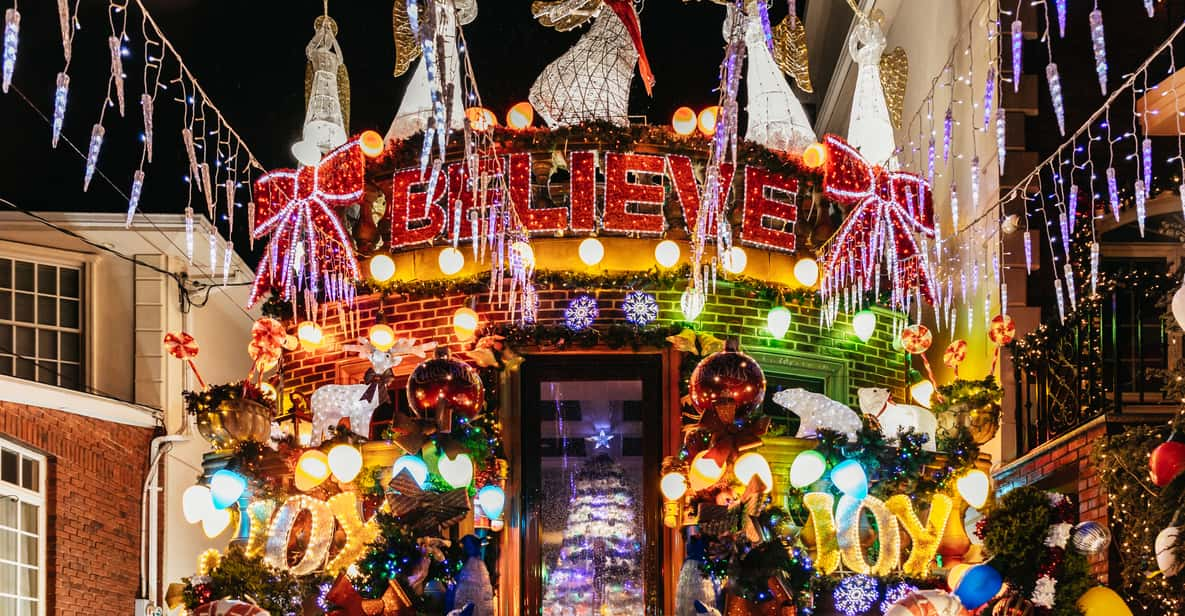
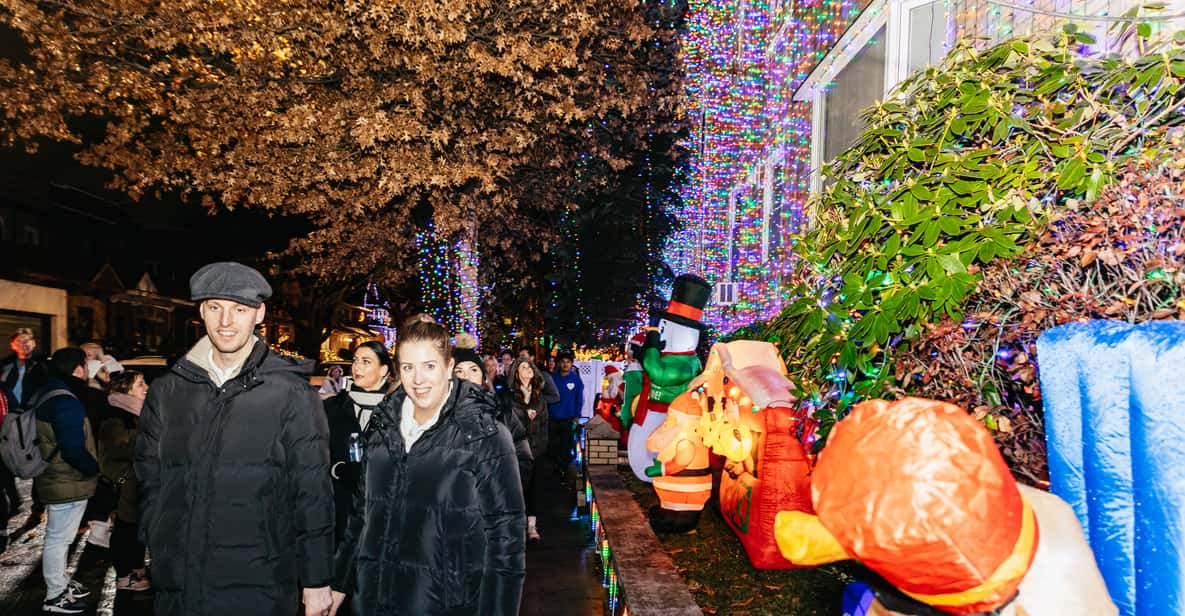
The core loop is four blocks: 84th Street, 12th Avenue, 83rd Street and 11th Avenue, inside the cluster that runs from 10th to 13th Avenues between 83rd and 86th.
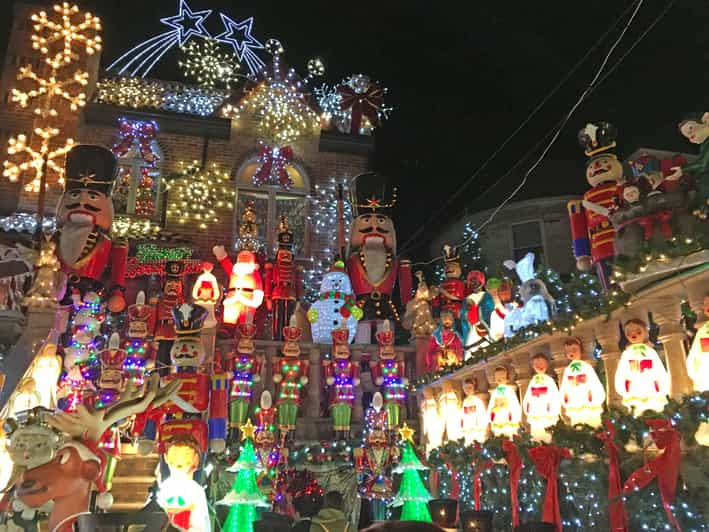
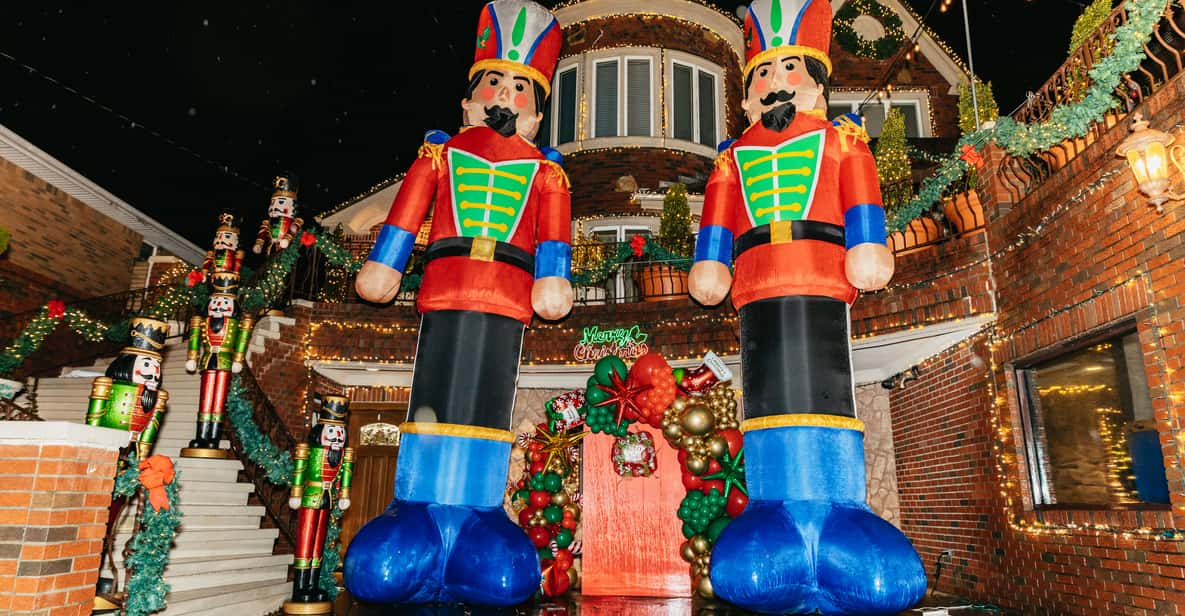
Start at Lucy Spata's house on 84th, the display that started the whole tradition in the 1980s, glowing angels in memory of her mother. Across the street, Florence Polizzotto's home fields animatronic Santas, 30-foot nutcrackers and miniature rides.
A guide earns the ticket price here. One that runs this route is the "Brooklyn: Dyker Heights Walking Tour of Top Christmas Lights": an hour and a half, the top home displays, and the story behind the tradition. The Brooklyn houses guide maps the full neighborhood.
The rules are simple and matter. Stay off the lawns, do not block driveways, keep voices down, and shoot photos without crowding the houses.
The streets are safe at night in December, with heavy foot traffic and a police presence, but the blocks go dark between 9 and 10 pm, so arrive by dusk. For house lights without the bus crowds, Bay Ridge along Narrows Avenue between 79th and 83rd does its own quieter version.
Bay Ridge, a short walk before the display blocks, is where the warm stops live, so plan that side of the evening in advance rather than hoping for something on the residential streets themselves.
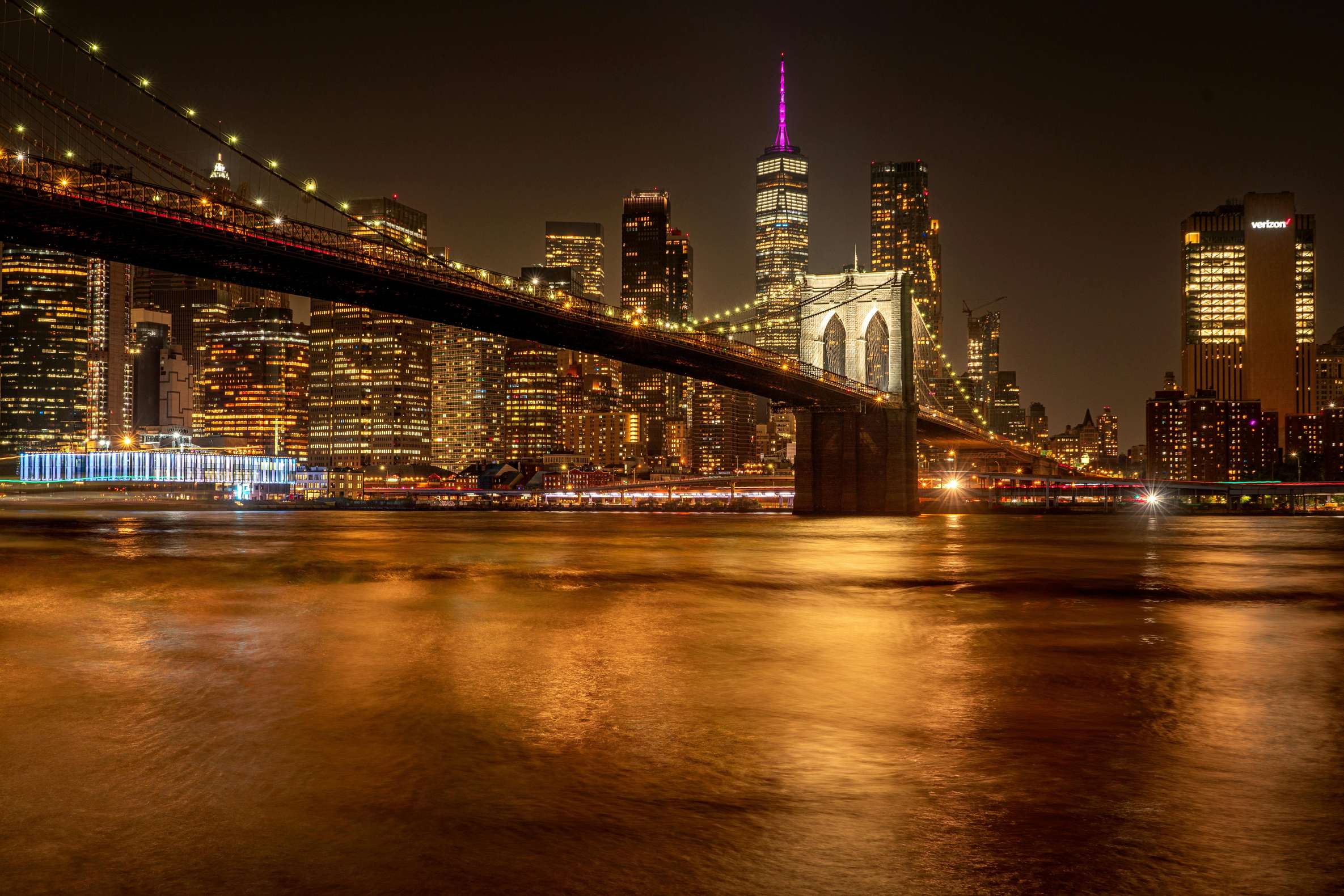
For families who would rather stay warm, the drive-through shows deliver.
Skylands Stadium in New Jersey strings a mile-long course with more than two million lights, a half-hour crawl past a light tunnel, wreath arch, skating bears and scooter-riding elves, with music broadcast through the car radio and a free-to-enter Christmas village alongside. The drive-through guide compares the regional options.
Jones Beach runs a two-and-a-half-mile course at the same slow display speed, though on a busy weekend night the total time in the car can stretch toward two hours.
Both run rain, snow or shine, which is the quiet advantage: the weather never cancels the night, because you stay inside the vehicle.
The trade is the drive, 60 to 90 minutes each way from the city, tolls on the return crossing, and gate sales on peak weekends that can turn cars away. Book ahead for a shorter entry line, and arrive about twenty minutes before gates open to skip the worst of the queue.

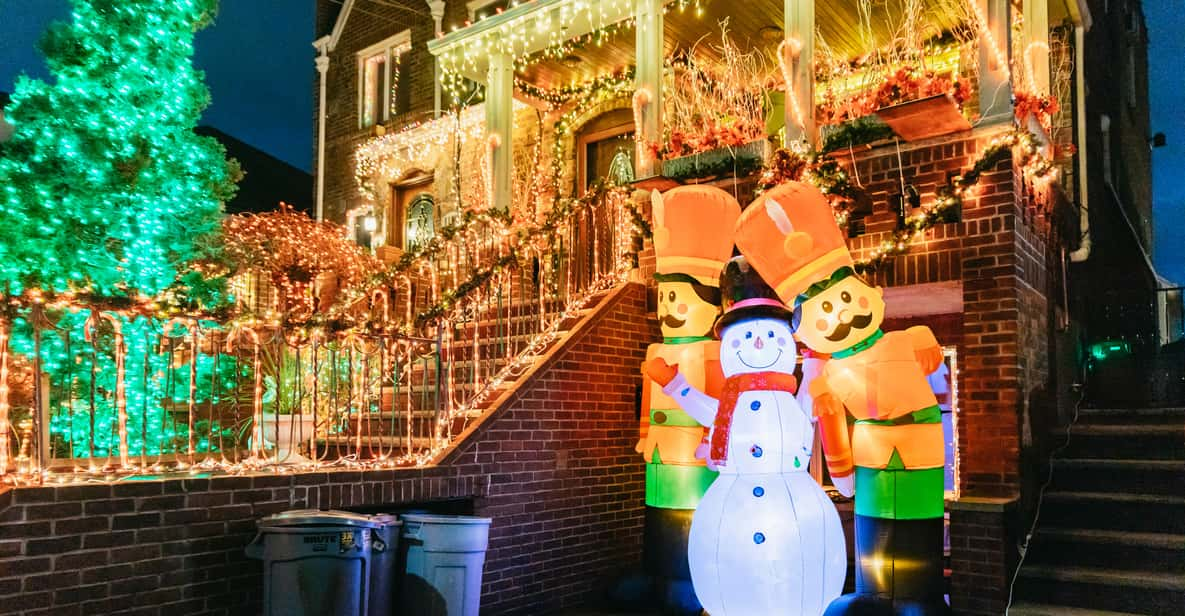
December evenings in Brooklyn sit between about 25 and 40 degrees Fahrenheit, and you will be standing in them for an hour or more. Layers do the work: thermal base layer, insulated coat, knit hat, scarf, insulated gloves, and flat weather-resistant boots over thick wool socks. Cold pavement pulls heat out through the soles first.
Bathrooms are the hidden logistics problem. Dyker Heights has essentially none, and no buildings to ask.
Stop beforehand in Bay Ridge along 4th Avenue and 86th Street, or at the Dyker Library at 13th Avenue and 82nd Street, the closest warm indoor spot. In Midtown, Bryant Park has public restrooms behind the library and near the carousel.
The photo fix is simple. Wipe the lens, tap a bright bulb and drag the exposure down, and shoot during the blue hour, ten to thirty minutes after sunset, when ambient light balances the display.
Skip Night Mode unless the phone is on a tripod, and turn off the flash. Cold drains batteries fast, so keep a spare or a power bank in an inside pocket.
None of the packing list is optional when the wind comes off open residential blocks. The difference between a good night and a short one is usually the socks.
Do Midtown on a weekday morning and evening in the same day, then give Dyker Heights its own night on a heated tour. The displays are free, the walking is the cost, and the first week of January buys the same lights at half the crowds.
The quick answers travelers ask most, from opening dates to crowds, costs, and getting around in the cold.
 New York City2026
Most decorations appear between mid-November and Thanksgiving. Department store windows and the holiday markets are fully active by Thanksgiving, Hudson Yards switches on in mid-November, and the Brooklyn residential displays launch the weekend after Thanksgiving. The big Midtown tree stays dark until its ceremony the Wednesday after Thanksgiving.
The Midtown tree glows daily from 5 am to midnight and stays lit for 24 hours on Christmas Eve. The Dyker Heights houses in Brooklyn turn on around dusk and most shut off between 9 and 10 pm, so plan to arrive by 6 pm.
Yes. Most displays stay lit through the first week of January. Dyker Heights keeps its houses decorated through early January with tours running until about January 6, and the Midtown tree stays up until mid-January.
The famous ones are free. Walking the Dyker Heights streets, standing in the plaza under the Midtown tree, and watching the Saks facade show all cost nothing. The main exception is the Lightscape trail at Brooklyn Botanic Garden, which charges admission.
Midtown forms one easy walking route along Fifth Avenue from Central Park South past St. Patrick's Cathedral and the big tree, with Hudson Yards nearby. Brooklyn's Dyker Heights is the other great walk, with the densest cluster of decorated houses between 11th and 13th Avenues from 83rd to 86th Streets.
Friday through Sunday evenings draw the biggest crowds, peaking between 5 and 9 pm. Monday to Thursday evenings are noticeably calmer everywhere, and walking Dyker Heights early in December on a weekday feels almost quiet.
Heated, climate-controlled coaches run round trip from Midtown Manhattan and drop you close to the displays. By subway, the R train to 86th Street still leaves a 15-to-20-minute hilly walk each way in the cold.
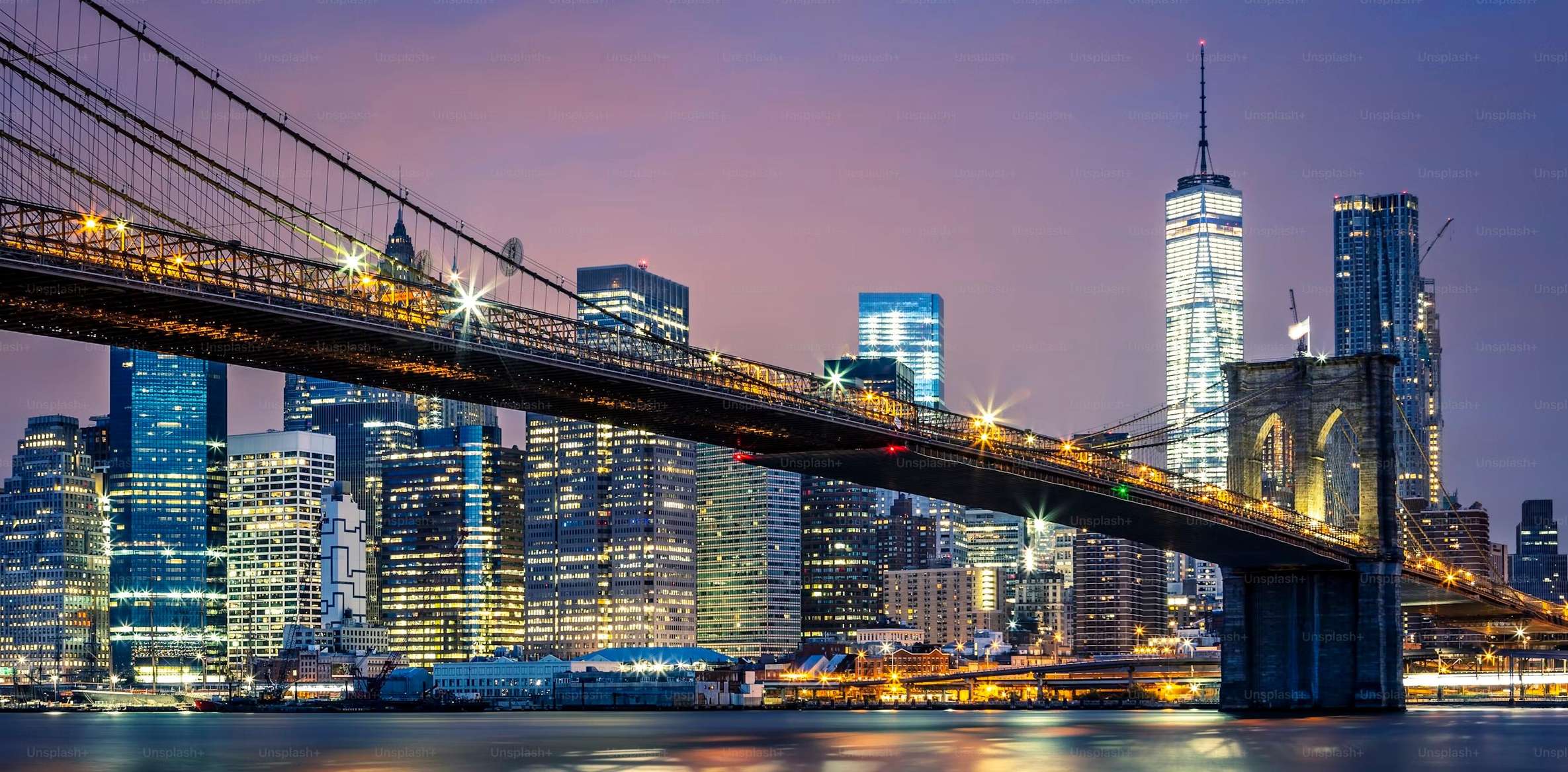
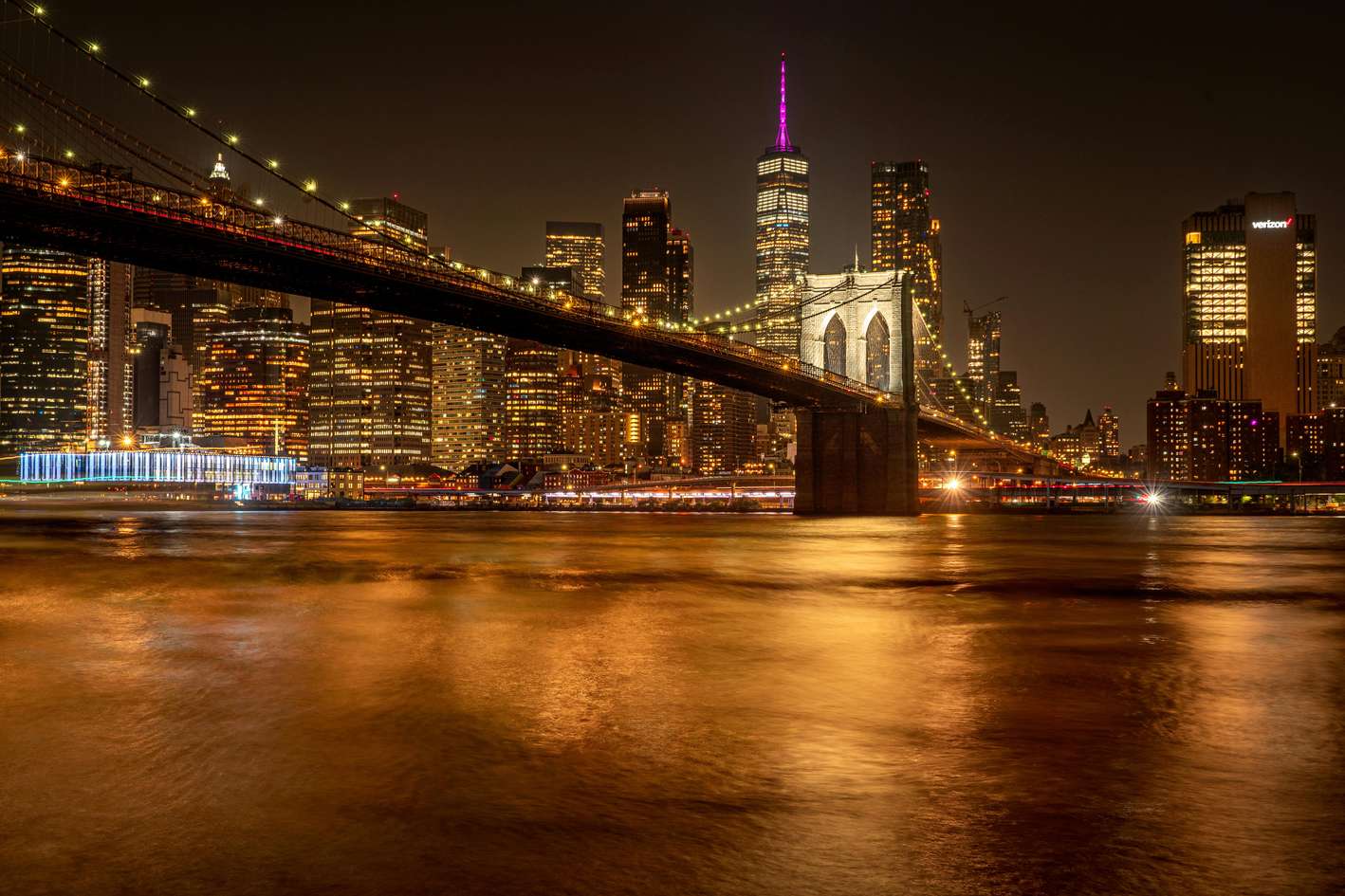
Midtown's landmarks work as one flexible walk, but Brooklyn needs its own trip, since public transit takes 45 to 60 minutes each way. Some bus tours combine the two: they ride past the Midtown sights, stop for skyline photos at Brooklyn Bridge Park, then walk Dyker Heights.
Dyker Heights has virtually none, so go before you start; the Bay Ridge and Dyker library branches work well. In Midtown, Times Square has no public restrooms, but Bryant Park does, two blocks south.
London's window displays lean on tradition and fine detail, while New York's favor invention and scale: a tree crowned with a star of three million crystals, a facade show of nearly 300,000 LEDs, and whole houses wrapped in tens of thousands of lights.
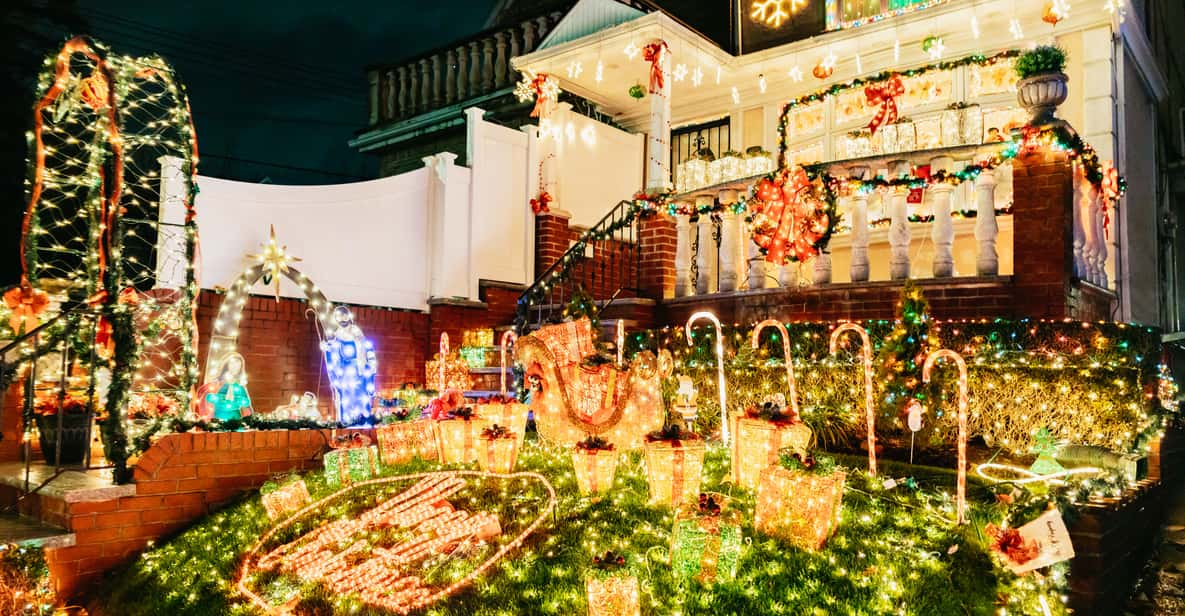
Ride a heated bus from Manhattan to Brooklyn's brightest holiday blocks, with a skyline photo stop on the way home and free cancellation up to 24 hours before.